Blood, Revolution, and Big Belting: Ranking Frank Wildhorn on Broadway
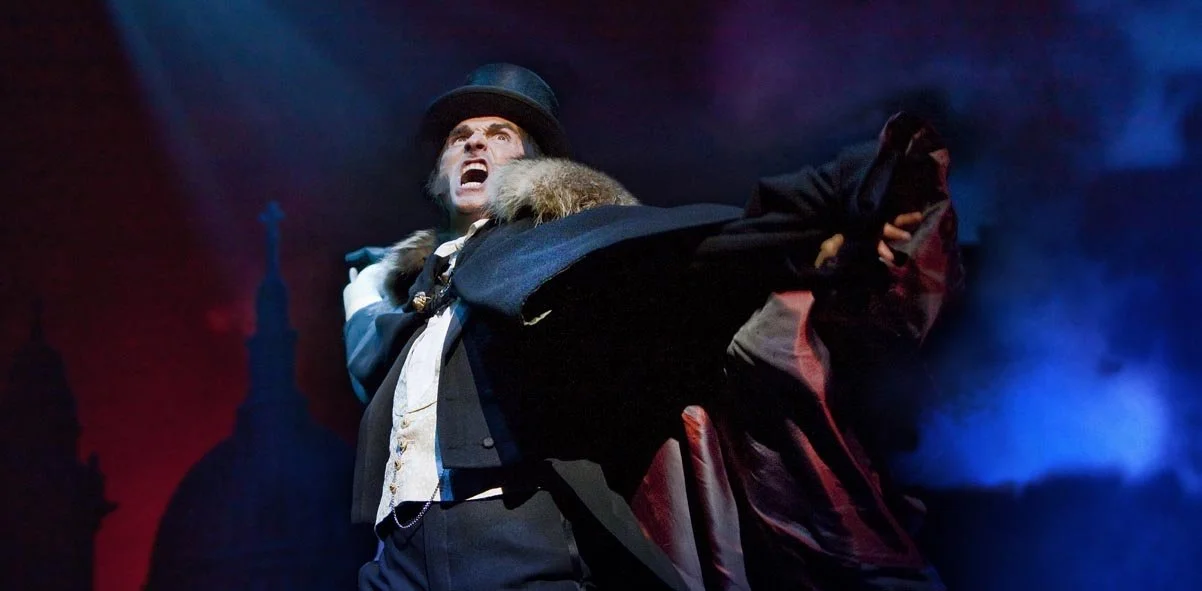
Marti Pellow in the UK touring production of Jekyll and Hyde by Frank Wildhorn. Photo: Simon Fowler
by Chris Peterson
The other day I realized that I’ve pretty much seen every Frank Wildhorn musical that’s made it to Broadway. Some more than once. Some in different productions. Some with the kind of anticipation that comes from loving his work, and some with the quiet dread of knowing exactly what you’re walking into.
Which feels like the right place to start, because ranking Frank Wildhorn shows isn’t about pretending they’re all the same kind of “good.” It’s about understanding the specific, unapologetic lane he’s always lived in. Big emotions. Big voices. Melodrama without shame. When he hits, he hits. And when he doesn’t, you still walk out humming something.
So here’s my ranking of the Frank Wildhorn musicals that appeared on Broadway, from the bottom up, based purely on my experience sitting in those seats. Note: Sorry Victor/Victoria, I didn’t see that show live and he really only did some additional work on that anyway.
6. Dracula (2004)
Dracula is the Frank Wildhorn show I wanted to love more than I actually did. It feels like it should be a slam dunk. Gothic romance, tortured souls, big emotions, and a composer who thrives on writing music for people in emotional free fall. And there are moments where you catch a glimpse of that show. When the score swells and leans into longing, you can hear Wildhorn doing what he does best. Big, earnest ballads. No winking. No restraint. Just feelings, everywhere.
But for me, the show never quite clicks. Still, I respect the swing. The music has flashes of grandeur, the central romance is treated sincerely, and even when it doesn’t work, it’s never boring. It just doesn’t quite sink its teeth in.
5. Wonderland (2011)
I’ll be honest, I didn’t hate Wonderland the way a lot of critics seemed to. I remember walking out thinking, okay, that wasn’t great… but it wasn’t the crime scene everyone’s making it out to be either. There’s energy here. There’s ambition. And musically, you can hear Frank Wildhorn trying to stretch himself into something more pop-forward, more “now.” I respect that impulse, even if the execution doesn’t quite land.
The problem is that when you line Wonderland up against his stronger Broadway work, it just feels thinner. The book is doing way too much, the metaphors are heavy-handed, and the emotional throughline gets lost in all the cleverness. Wildhorn is at his best when he lets emotion lead and spectacle follow, and here it feels reversed.
That said, there are moments that work. A few songs genuinely soar, the central idea isn’t without merit, and I never felt bored watching it. It just doesn’t play to his greatest strengths, and that’s ultimately why it falls short.
4. Bonnie & Clyde (2011)
This is a show that knows exactly what kind of musical it wants to be, even if Broadway never quite embraced it. From the jump, songs like “Picture Show” and “This World Will Remember Me” establish character fast, and they do it without apology.
Where the show really shines, though, is in its emotional intimacy. “Dyin’ Ain’t So Bad” is one of Wildhorn’s most effective ballads, period. It’s simple, clear, and devastating in its optimism. Even the darker material, like “God’s Arms Are Always Open,” leans into that Wildhorn tension between faith, violence, and inevitability.
Is it perfect? No. But it’s confident, tuneful, and emotionally honest. And honestly, it’s aged far better than its Broadway run ever suggested.
3. The Civil War (1999)
The Civil War sits in a strange, complicated place for me, because I don’t just remember seeing it, I remember living inside its music. Not long after 9/11, and as the Iraq War was beginning, I directed a revue and staged a vignette to “Tell My Father.” I thought I understood the song going in. I didn’t. Rehearsing it was brutal in the quiet, emotional way that sneaks up on you. Every note felt heavier than it was supposed to, and suddenly this historical lament felt painfully current.
That’s kind of the power of this show. It’s not traditional. It’s not tidy. It’s not always dramatically cohesive. But Wildhorn’s score taps into grief, patriotism, loss, and moral confusion in a way that can hit you when you least expect it.
It may not be his most accessible Broadway work, but it might be his most emotionally haunting.
2. Jekyll & Hyde (1997)
If this were about influence, longevity, or sheer cultural footprint, Jekyll & Hyde would probably be my number one. It’s the Frank Wildhorn show that refuses to disappear, and there’s a reason for that. This score is unapologetically huge. Emotional. Theatrical in capital letters. It understands that melodrama isn’t a flaw, it’s the point.
The songs are iconic for a reason. “This Is the Moment” isn’t just a theater anthem; it’s practically a rite of passage. “Someone Like You” is romantic devastation distilled into four minutes. “Confrontation” remains one of the most audacious, thrilling challenges ever written for a single performer. When this show works, it really works.
Jekyll & Hyde knows exactly what it is, commits without apology, and has earned its place as one of the most enduring modern Broadway scores. Even at number two, it’s a powerhouse.
The Scarlet Pimpernel (1997)
This is my number one, and honestly, it’s not a hard call. The Scarlet Pimpernel is the Frank Wildhorn musical where I think everything he does well comes together most successfully. The score is sweeping without being exhausting, romantic without tipping into parody, and heroic in a way that feels earned. It understands scale, but it also understands restraint, which isn’t always a word people associate with Wildhorn, and that’s exactly why it works so well.
Song for song, this might be his strongest Broadway score. “Into the Fire” is thrilling and propulsive, the kind of number that makes you sit up straighter in your seat. “You Are My Home” is genuinely tender and grounded. “She Was There” is heartbreakingly intimate.
What really seals it for me is the balance. Romance, politics, adventure, wit, and emotion all coexist without one overwhelming the others. It’s big, yes, but it’s also smart. The Scarlet Pimpernel feels confident, generous, and deeply theatrical. For my money, it’s Wildhorn at his most complete, and his best work to hit a Broadway stage.