by Chris Peterson
I decided to start a new series because, apparently, I do not know how to engage with cast recordings in a normal way. I have opinions. I have favorites. I have unnecessary attachments to specific orchestrations. So instead of pretending otherwise, I figured I might as well make it a thing.
This new series, which I’m basing on reader suggestions, is going to take a look at cast recordings people want me to revisit, react to, and probably overthink.
Some of these are going to be beloved classics. Some are going to be underrated gems. Some may be messy. Some may be masterpieces. Ideally, all of them will give me something to say, which, if you know me at all, is not exactly a high bar.
I won’t be writing about EVERY song but definitely covering most of them.
Along the way, I’ll also be handing out a few completely subjective but very important honors. Every review will include the following awards:
Who Wins This Recording?
For the performer or presence that walks away owning the album
Which Song Gets Cut?
For the track I would sacrifice to the theatrical gods
Best in the Show
For the one song that stands above the rest. This song will also earn a place on a Spotify playlist I’m embedding at the bottom of this article, which will become a running collection of the standout champion from each cast album in the series.
And finally:
Does This Still Slap Today?
This is my final gut-check category: beyond nostalgia and reputation, does this cast recording actually still hit in the present day? It is where I ask whether the album still feels exciting, moving, and worth returning to now, even if some parts are dated.
And yes, I know I’m starting with The Phantom of the Opera. Is it an obvious choice? Sure. Maybe even a basic one. But sometimes you do not start with the deep cuts. Sometimes you begin with the giant, melodramatic, chandelier-dropping elephant in the room. If I’m going to do a series on cast recordings, it makes sense to start with the iconic before we dig into the more niche corners of the musical theatre library.
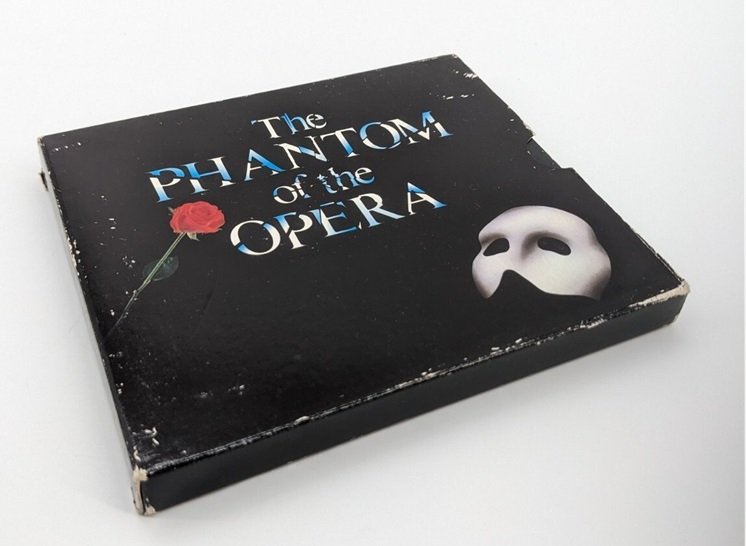
So first up: the original London cast recording of The Phantom of the Opera.
“Prologue / The Stage of the Paris Opéra”
From the jump, this show says: “Oh, you thought you were here for a nice evening?”
No. We are resurrecting trauma through auction items. The opening has that delicious old-fashioned theatricality to it, and then of course the organ comes crashing in as if Andrew Lloyd Webber himself kicked down the door. It is still one of the great opening jolts in musical theatre.
“Overture”
An absolutely ridiculous flex of a piece of music, in the best way possible. This is the kind of overture that makes you sit up straighter, even if you are just listening in your car or pretending to do chores in your kitchen. It sounds expensive. It sounds gothic. Also, no matter how many times I hear it, I still get that little internal jolt of excitement.
“Think of Me”
This is such a smart early number because it establishes that Christine has got far more going on vocally than anybody in that opera house seems prepared for. Sarah Brightman’s voice here is so unmistakably Sarah Brightman. There is a kind of floating quality to her singing that makes Christine feel almost unreal from the beginning, which actually serves the show well.
And that is part of why Brightman works so well in this original version of the role. She is not giving you a modern, belt-forward Christine. She is giving you something more fragile, operatic, and stylized.
“Angel of Music”
This is where the show begins to slip from theatrical backstage drama into a full fever dream. I have always loved how this number builds Christine’s mythology around the Phantom before we really meet him. It gives the energy of “Girl, I do not think this voice teacher is normal.”
Brightman is especially effective here because of the genuine innocence in the way she sings Christine’s belief. She does not play it like Christine is already suspicious. She sounds truly entranced, which makes the Phantom’s hold on her feel all the more believable.
“The Phantom of the Opera”
No notes. Well, that is not true, there are many notes, and they are all dramatic.
This song is the definition of theatrical adrenaline. It is massive, pulsing, surreal, and somehow both elegant and completely unhinged. The title song has to carry so much weight, and it does.
Both Michael Crawford and Brightman sound thrilling on it for opposite reasons. He brings that eerie command. She brings that soaring, almost disembodied panic and surrender. They balance each other beautifully.
“The Music of the Night”
I know this is supposed to be the song. The big one. The iconic one. The seductive, velvety, candlelit centerpiece of the whole score. I fully understand why it has that reputation.
But if I am being honest…I have never been the biggest “Music of the Night” person….(Me bracing for thrown tomatoes)
That is not to say I think it is bad. Michael Crawford sounds terrific on it, and the song does exactly what it is supposed to. It just has never been the track that grabs me most.
“Notes / Prima Donna”
This sequence is one of the score’s most underrated pleasures. “Notes” is deliciously catty and chaotic, and “Prima Donna” is one of those big ensemble numbers that makes me disproportionately happy. Also, I am a sucker for a number where multiple people are losing control in perfect rhythm.
“All I Ask of You”
A gorgeous, completely sincere melody. Almost aggressively sincere. This is the show briefly giving us a more traditional love song before everything goes back to emotional terrorism. More to come on this.
“All I Ask of You (Reprise)”
And there it is. Pain. This reprise is short, but emotionally it hits harder than some full-length numbers in other scores. Crawford is so good here. The anger is there, obviously, but so is the devastation. He sounds betrayed in a way that is genuinely sad, even when you are also thinking: “Sir, this situation is entirely your fault”.
“Masquerade / Why So Silent…”
“Masquerade” is terrific because it sounds glamorous while also carrying this sense that nobody is really safe. Then “Why So Silent…” cuts through it all like a blade. Crawford’s presence here is wonderful because he sounds almost amused at first, and then suddenly terrifying. He always understood that the Phantom is most effective when he feels unpredictable.
“Wishing You Were Somehow Here Again”
Beautiful, full stop. Brightman sounds especially vulnerable here, and the song plays right into what she did best in the role. There is a purity to her sound that gives the number this almost prayer-like feeling. I think it is one of her strongest tracks on the album.
“The Point of No Return”
I know this is the part where a lot of Phantom fans really lock in, and I get why. But I have never been the biggest fan of this song. That does not mean I think it is bad. For me, it is one of those songs I appreciate more than I actually love. I understand its purpose, I respect the tension, I see why people are into it, but I do not personally arrive at this track like: “Yes, here we go.”
“Down Once More… / Track Down This Murderer”
A full banquet of chaos. This final sequence gives you confrontation, desperation, emotional collapse, mob energy, romance, pity, and just enough redemption to leave everyone arguing on the ride home.
Crawford is especially strong here because he lets the Phantom unravel in a way that is ugly and sad rather than glamorous. That matters. The ending only works if you feel the tragedy and the damage at the same time. Brightman, to her credit, holds her own in the final emotional turn.
Who Wins This Recording? Sarah Brightman
I know Michael Crawford is the title role. I know the Phantom is the Phantom. And he is terrific on this recording.
But for me, Sarah Brightman wins this one.
A huge part of that is because her voice is so tied to the identity of this album. She is undeniably the sound of this original recording. There is something so airy, fragile, and almost unreal about the way she sings that gives the whole album its particular mood.
More than that, she is carrying a lot on her shoulders. Christine has to be believable as innocent, gifted, emotionally torn, vulnerable, and compelling enough that two men build their entire emotional lives around her, for better or much worse.
So yes, Michael Crawford is iconic here, no argument. But Sarah Brightman is the one who, for me, really defines the sound and atmosphere of this recording.
Which Song Gets Cut? “The Point of No Return”
I know. I know. I can already hear the gasps from the Phantom faithful.
But if I have to cut one song, it is “The Point of No Return.”
Let me be clear, this is not because I think it is bad. It is not bad. But if something has to go (and be replaced with something else), this is the one I am sending out into the Paris night.
Best in the Show: “All I Ask of You”
Phantom is such a dark, heavy, emotionally loaded score, and then this song arrives like an actual breath of fresh air, and maybe that is part of why it stands out so much.
It is the song on the album that feels the most openly human to me. It’s just a really beautiful melody and a moment where the show lets itself be tender. In a score full of spectacle and intensity, this one just lands with grace.
It is also one of those songs that reminds you why people fell for this show in the first place. Yes, the organ is iconic. Yes, the title song is huge. But “All I Ask of You” is the one that, for me, lingers in a quieter, lovelier way.
So that earns me the Best in the Show honor and the first spot on the Spotify playlist.
Does This Still Slap Today? Yes.
Very much yes.
Is this score extremely 80s? Of course it is. But that is also part of its charm. Beneath all the grand organ swells and gothic excess, there is something genuinely timeless in the writing. The atmosphere is so complete that once you enter it, you kind of understand why people keep returning to it again and again.
Which is also why, even now, people are still flocking back to this material through Masquerade, the immersive New York reimagining of The Phantom of the Opera, which is currently running Off-Broadway. There is obviously still an appetite for this world, this music, and this particular brand of theatrical longing.
Because for all of its 80s bombast, Phantom still knows how to do the thing that matters most. It sweeps you up. It gives you romance, danger, heartbreak, spectacle, and just enough melodrama to make you feel like maybe life should be a little more theatrical than it currently is.
And honestly, that never really goes out of style.