by Chris Peterson
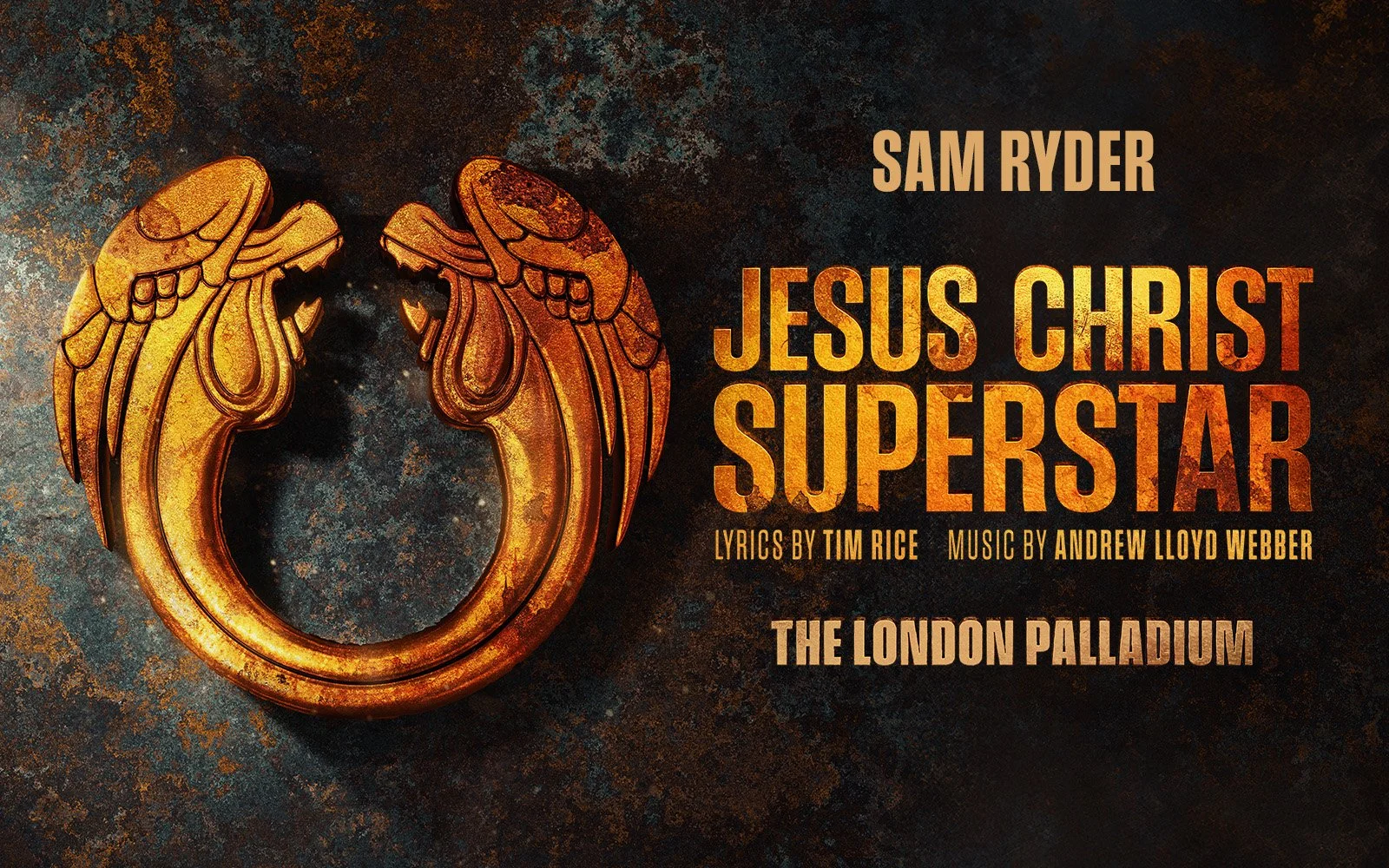
A new production of Jesus Christ Superstar — slated for next year at London Palladium — has ignited a fresh wave of debate after theatre-goers discovered the poster now carries a trigger warning. The advisory notes that the show will depict a crucifixion, and warns of “imitation blood” and “some violence.” Some fans expressed confusion or frustration, saying that the warning seems unnecessary for a musical whose subject matter and dramatic arc are widely known.
I understand why the producers of Jesus Christ Superstar might include content warnings. Violence, blood imagery, the crucifixion. None of that is light material, and I have never been opposed to giving audiences a moment to prepare themselves. In general, I think content warnings can be one of the more compassionate things a theatre can offer. A little clarity at the top can prevent someone from being blindsided and give them the space to actually enjoy the show.
But reading that this particular production added a trigger warning because the show contains a crucifixion made me stop for a moment. This is Jesus Christ Superstar. The story is not exactly obscure. If you are buying a ticket, you already know betrayal and death are part of the deal. The title alone tells you the central event. There is no version of this musical that does not end with that moment. So treating it as though the audience might be shocked to discover Jesus is crucified feels like we have drifted away from common sense.

And this comes from someone who believes content warnings have a real place in theatre. There are plenty of productions where those warnings are necessary and kind. Shows where the violence is graphic or rooted in real trauma. Shows that deal with sexual violence or self harm or depictions of abuse. There are theatres that publish detailed advisories so people can understand exactly what they might walk into. When you are dealing with a work like Stalking the Bogeyman or anything involving explicit trauma, a warning is not coddling. It is responsible. It can actually serve as a way for someone to feel safe enough to engage with the art at all.
But that is exactly why something like this becomes a little frustrating. When the content is unexpected or intensely realistic or rooted in lived trauma, a warning makes complete sense. When it is a built in fact of one of the most well known stories in western culture, a warning starts to feel less like care and more like the theatre trying to cover itself.
And the unfortunate part is that choices like this hand an easy talking point to people who love screaming that theatre has become too fragile. I do not agree with them, but I can see how a warning for a crucifixion in Jesus Christ Superstar gives that narrative more fuel than it deserves.
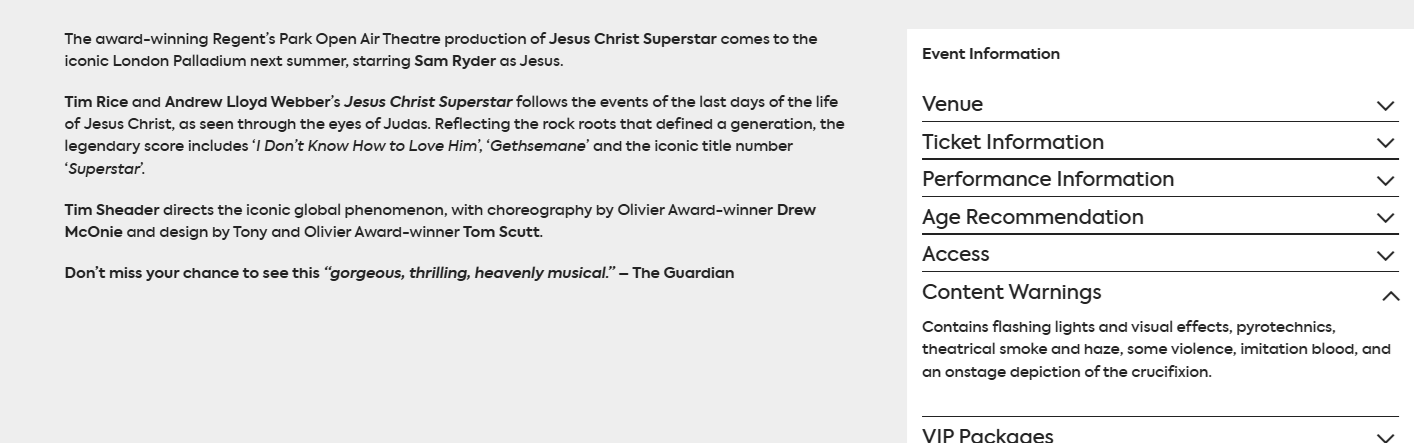
It also raises a practical question. Where does the line go next. If Jesus Christ Superstar gets a warning for its crucifixion, then should West Side Story carry a notice about the stabbing. Should Les Misérables spell out that people die. Or that Romeo and Juliet ends in suicide. At a certain point, every play and musical would need its own catalog of disclaimers, and the effect quickly becomes meaningless.
Theatre works best when the audience is informed but not insulated. A good content warning can genuinely help someone prepare for something that might hit too close to home. I will always defend that. But I also think trusting the audience matters. Adults know what they are signing up for when they walk into a musical about the crucifixion of Jesus Christ. And unless this specific production is doing something wildly more graphic than the typical staging, the warning starts to feel unnecessary.
It is not that warnings are bad. It is that overusing them dilutes the purpose they were created for. If everything is a trigger warning, then nothing really is. And that is the part that makes me pause. Because content warnings are important when they are used intentionally. They protect. They empower. They give someone the choice to step in with clarity instead of fear. We should keep that purpose intact. Not water it down by warning people about something they already knew before they ever walked through the door.