“Beaches”, Broadway, and the Power of Knowing Your Audience
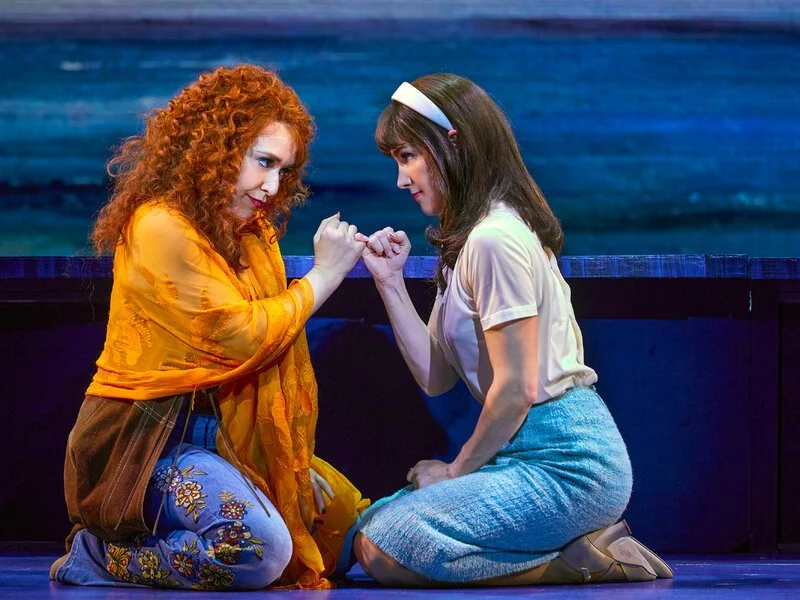
Jessica Vosk and Kelli Barrett in Beaches. (Photo by Trudie Lee)
by Chris Peterson
When I saw the news that a Broadway musical based on Beaches is officially on the way, my first thought wasn’t surprise. It was more like… of course. Of course this is happening now. Of course this movie is making its way to a Broadway stage, where people openly cry into Playbills and then go out for a drink to talk about how emotionally wrecked they are.
Because if you were a certain age in the early 90s, Beaches wasn’t just a movie people watched once. It was a shared experience. A foundational text. Something you stumbled onto on cable and then never recovered from. You didn’t just watch it you felt it. The friendship, the jealousy, the love, the resentment, the inevitability of it all. “Wind Beneath My Wings’ had a chokehold on pop culture for years after the movie came out. And yes, that ending. Everyone remembers exactly where they were the first time they watched it and thought, oh, this is what movies can do to you.
That generation has grown up. They’ve got careers, kids, disposable income, group texts dedicated to planning nights out. And they are, not coincidentally, still the backbone of Broadway audiences. White women in their 40s have long been the most consistent ticket buyers in the industry, and they know what they like. Emotional storytelling. Familiar titles. Something that makes the price of the ticket feel justified on a gut level. Beaches checks every one of those boxes without even trying.
So yeah, I think this show is going to do well. I think it’s going to sell tickets and brunch packages and group sales. I think there will be nights where half the audience already knows they’re going to cry before the lights even go down. And I don’t say that dismissively. There’s something kind of honest about it. Broadway has always been, at least in part, about meeting audiences where they are emotionally.
What interests me more, though, is what this might signal to producers. Because this feels like a moment where leaning into audience behavior isn’t just smart, it’s unavoidable. Not in a cynical, paint-by-numbers way, but in a let’s actually acknowledge who is showing up and why kind of way. People don’t buy Broadway tickets randomly. They buy them because a story promises to make them feel seen, remembered, undone, comforted. Beaches is practically engineered for that.
That said, there’s a line here, and it matters. Paying attention to audience behavior can’t mean narrowing the lens so far that we lose sight of who isn’t in the room, or who still struggles to feel represented on Broadway stages. BIPOC attendance and representation can’t be an afterthought or something that only gets addressed when it feels “marketable enough.” The industry has made progress, but progress doesn’t hold itself in place without intention.
I don’t think these things are at odds, though. I don’t think programming a show like Beaches means turning your back on broader representation. If anything, the financial success of projects like this should create more breathing room. Broadway has always relied on crowd-pleasers to bankroll risk. That’s not new. What matters is what gets done with that stability once it’s secured.
So yes, let Beaches have its moment. Let people sob. Let that generation feel like Broadway is speaking directly to them again. But let it also be a reminder that understanding your audience doesn’t mean freezing them in time. It means using what you know about who’s in the seats to thoughtfully, intentionally expand who gets invited next.