To the Folks Dismissing Community Theatre
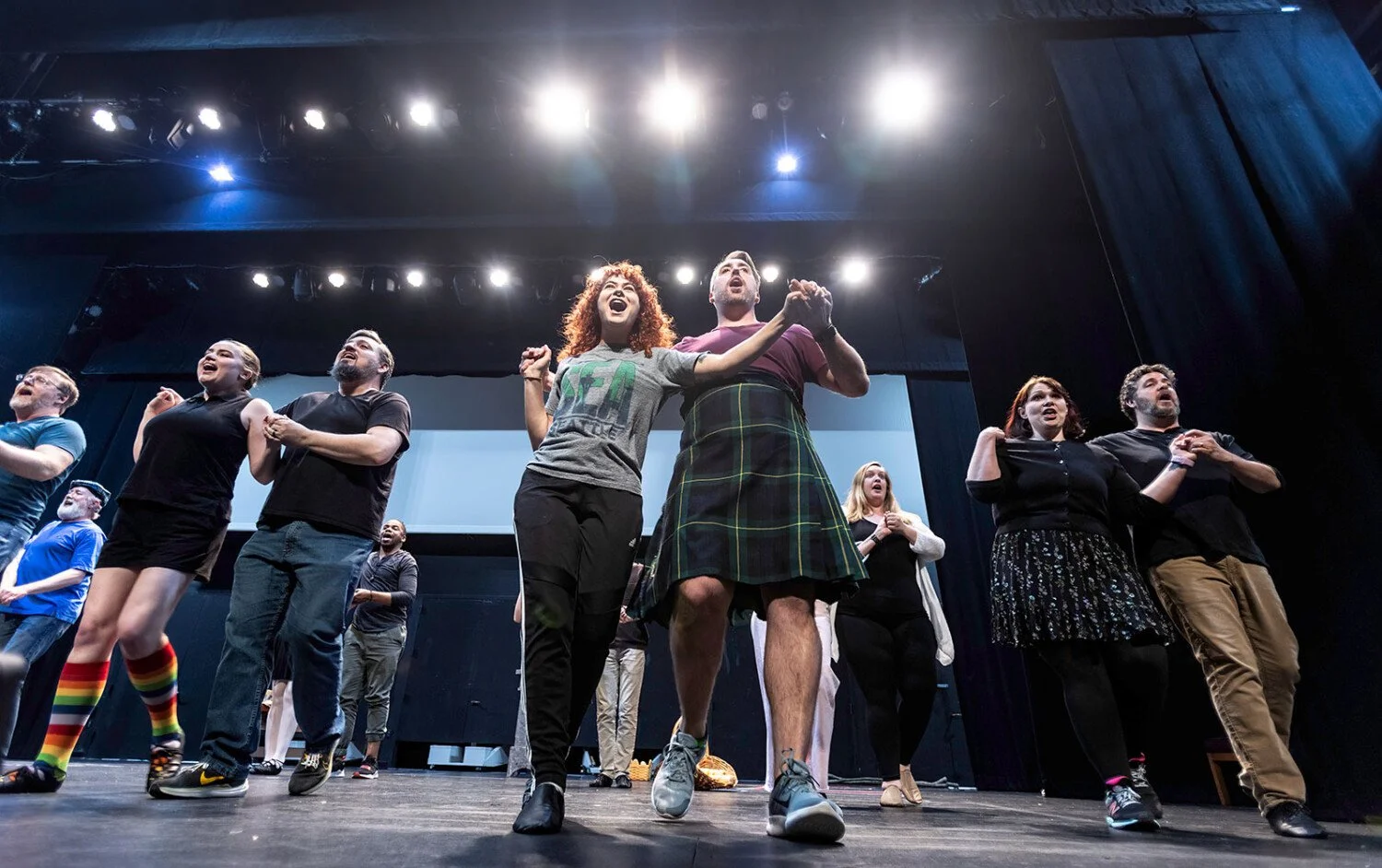
Cary Players Community Theatre (Photography By Jonathan Fredin)
by Chris Peterson
This column started, as these things often do, with me scrolling through a comment thread I probably should have ignored. Someone mentioned community theatre, and the replies were depressingly familiar.
The jokes. The eye-rolling. The assumption that anything outside a professional pipeline is automatically lesser.
I noticed it partly because I’ve spent a good chunk of my life in and around theatre in all its forms — professional, educational, regional, community, and everything in between. I’ve seen what polish looks like. I’ve seen what resources can do. And I’ve also seen what happens when people show up simply because they love the work. The disconnect between those realities is what stuck with me long after I closed the app.
I’ve been thinking a lot lately about the people who scoff at community theatre. You know the type. The ones who wrinkle their nose when you mention a local production, who drop words like “amateur” or “cute” or “bless their hearts” like they’re being generous instead of dismissive. The ones who treat community theatre as something you grow out of, not something you choose.
This isn’t me trying to win an argument with those people. I’m not interested in scoring points or delivering a takedown. Honestly, I don’t think most of them are bad people. I think they’re just missing something. And maybe they don’t even realize what they’re missing.
Community theatre is easy to underestimate if you’re only measuring art by polish, pedigree, or proximity to money. It doesn’t always have the sleek sets, the flawless vocals, or the kind of marketing budget that convinces you something is “important” before you even sit down. It’s uneven. It’s scrappy. Sometimes it’s messy. Sometimes it’s transcendent. And often it’s both in the same night.
But here’s the thing people forget. Community theatre is not pretending to be Broadway. It’s doing something else entirely.
It’s accountants and baristas and retirees and teenagers learning how to share space, take direction, listen, adjust, and show up for one another. It’s people choosing to spend their evenings building something together.
And yes, sometimes someone misses a note. Sometimes a scene lands a little crooked. But what you’re watching is real risk. Real effort. Real vulnerability. No safety net of celebrity or reputation. Just people standing under lights saying, “This matters enough to try.”
There’s also this idea floating around that community theatre is where talent goes to die. As if the only valid artistic path is linear and upward and paid. As if life doesn’t interrupt careers, or as if fulfillment has to look like a Playbill bio to count.
I’ve known actors who could absolutely hold their own on bigger stages but choose community theatre because it fits their life, their family, their sanity. I’ve known directors who care more about mentorship than momentum. I’ve known designers who do jaw-dropping work with almost no resources because they love the puzzle of it.
And I’ve known audience members who come not because they’re chasing prestige, but because they want to sit next to their neighbors and feel something together.
That part matters more than we admit.
If you’ve only experienced theatre as a product, I understand why community theatre confuses you. It’s not always slick. It doesn’t always flatter your expectations. But if you see theatre as a practice, as a communal act, as a way humans have always gathered to tell stories and ask questions and mark time together, then community theatre makes perfect sense.
Some of the most moving performances I’ve ever witnessed didn’t come from technical perfection. They came from someone clearly telling a story they needed to tell, with every ounce of themselves, in a room that wanted them to succeed.
So if you scoff at community theatre, I’m not asking you to stop having standards. I’m asking you to widen your definition of value. To consider that art doesn’t only live at the highest rung of the ladder. Sometimes it lives right where people are, built with limited means and unlimited care.
You don’t have to love every show. You don’t have to pretend every production is brilliant. But dismissing the entire ecosystem because it doesn’t meet an imagined professional benchmark misses the point so completely it hurts.
Community theatre isn’t lesser. It’s foundational. It’s where love of the form is sustained. It’s where stories keep circulating long after the spotlight moves on. It’s where theatre is still allowed to be human.
And if that doesn’t impress you, that’s okay. It doesn’t exist to. It exists because people need it. And because somewhere, tonight, a group of people will take a deep breath behind a curtain, squeeze each other’s hands, and step into the light anyway.