I Understand Why the “Wicked” Novel was Pulled From Schools. “Banning” It Misses the Point
by Chris Peterson
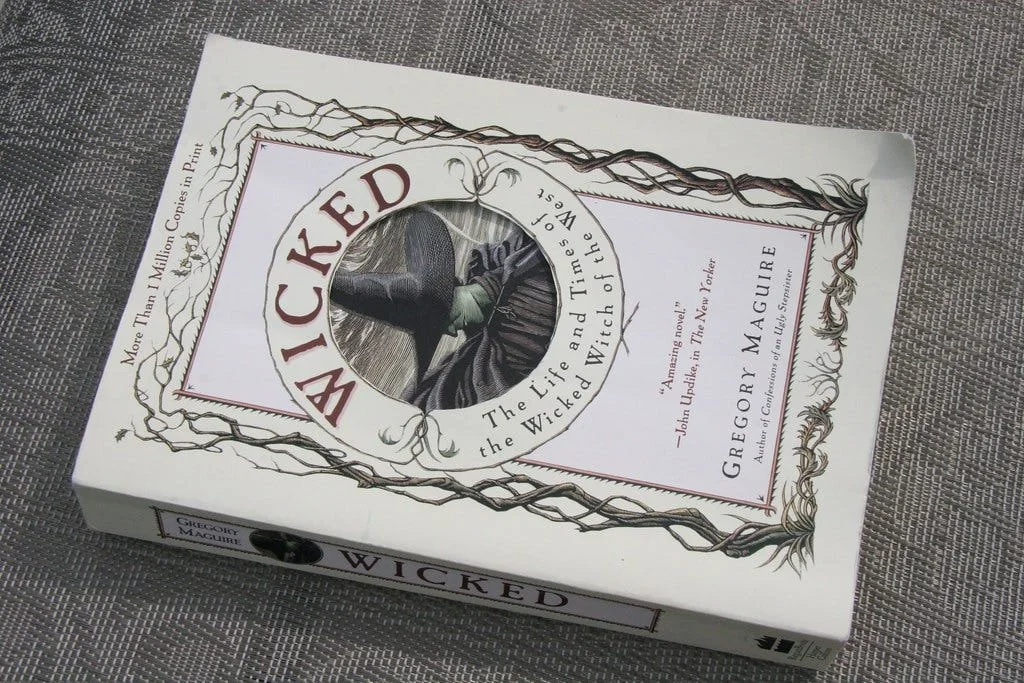
When I first saw the headlines about Wicked: The Life and Times of the Wicked Witch of the West being pulled from Utah public school libraries, my initial reaction wasn’t outrage. It was more of a pause. The kind where you reread the headline and notice which word is doing most of the heavy lifting.
That word, of course, was “banned.”
I don’t love it. I never really have. It’s a word that immediately drags a complicated, nuanced decision into culture-war territory, where everyone picks a side before anyone actually talks about what’s on the page. Once you use it, the conversation flattens. Context disappears. Everything becomes symbolic instead of specific.
And specificity matters here.
Because if we’re being honest, the Wicked novel is not appropriate for young readers. And I don’t think that should be some shocking or controversial thing to say.
This isn’t the Wicked most people have in their heads. It’s not the Broadway musical. It’s not the green girl flying at the end of Act Two. Gregory Maguire’s book is darker. Heavier. Intentionally uncomfortable. It contains explicit sexual material. Graphic sexual encounters. References to fetishistic behavior. Scenes involving sexual violence, coercion, bodily harm, animal cruelty, drug use, and political brutality.
That doesn’t make the book bad. In fact, it’s exactly what makes it effective for adult readers.
But it does make it a poor fit for a school library meant to serve children and teenagers at wildly different stages of emotional and cognitive development. Saying that isn’t censorship. It’s discernment. Schools curate all the time. They have to. Age appropriateness isn’t a dirty concept unless we pretend every boundary is automatically an act of repression.
Where this story starts to unravel for me is when Wicked gets swept up alongside other books under the same broad justification.
Because among the titles also removed was Nineteen Minutes by Jodi Picoult, and that decision I don’t agree with at all.
Nineteen Minutes is difficult, yes. But it’s difficult with intention. It deals directly with school violence, bullying, sexual assault, and the warning signs adults often ignore until it’s far too late. It doesn’t sensationalize trauma. It examines it. For a lot of teens, it provides language for realities they’re already living inside, whether we want to admit that or not.
Unlike Wicked, which is explicitly adult in both its sexual content and its political cynicism, Nineteen Minutes meets young people where they actually are. Pulling it from school shelves doesn’t protect students. It removes context. It shuts down conversation. It takes away a tool that has long been used to help teens process a world that isn’t waiting for them to be “ready.”
This is where the word “banned” becomes not just inflammatory, but unhelpful. When books with entirely different audiences and purposes are treated the same way, nuance vanishes. We stop talking about intent. About readership. About what a book is actually doing. Everything turns into a shouting match, and nothing thoughtful survives.
I can understand a school district deciding that Wicked belongs in adult spaces. I cannot understand applying that same logic to a novel that has been used, responsibly, to foster dialogue and empathy among teens.
If we’re going to draw lines, they need to be drawn carefully. If we’re going to remove books, we need to be honest about why. And if we’re going to have this conversation at all, we owe it to students, educators, and readers to use language that reflects reality instead of inflaming it.
Not every boundary is a ban. But not every removal is defensible either. And pretending those distinctions don’t matter is how we lose the entirely.