Winter Storm Exposes Broadway’s “Show Must Go On” Problem
by Chris Peterson
Broadway loves a good mantra. We whisper them to ourselves when things get hard. And near the top of that list, right next to “trust the process” and “it’ll be fine,” sits the ever-reliable the show must go on.
Except sometimes… no. Sometimes the show actually does not have to go on.
This weekend was one of those times.
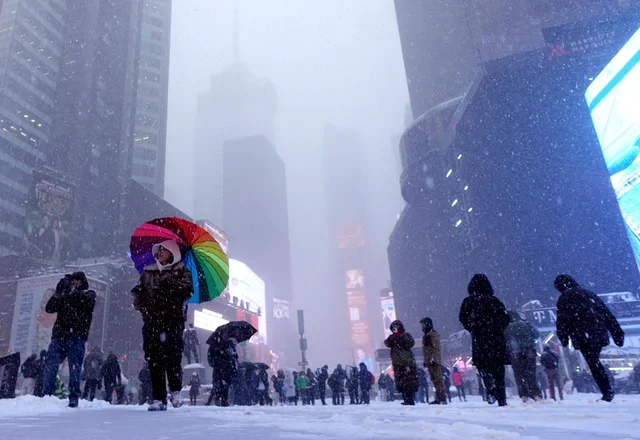
As a winter storm rolled toward New York, with weather alerts lighting up phones and public officials telling people, very plainly, to stay home if they could, Broadway leadership did what it so often does in moments like this: it waited. It crossed its fingers and hoped the problem would solve itself by curtain time.
It didn’t.
Instead, performers, crew members, front-of-house staff, and ticket holders were left in limbo. Shows were technically “still on” while trains were being suspended, roads were icing over, and people were doing the mental math of whether getting to work was worth the risk of not getting home.
And the frustration spilled out. Publicly. Because at some point, the silence from leadership starts to feel like an answer.
“This is so dangerous,” Olivia Hardy wrote. “Performers are human beings… it’s insane to send us to work in this and to fight to get home at 11pm.” That last part matters. Broadway loves the magic of an 8pm curtain but conveniently forgets that for a lot of workers, the night doesn’t end until long after the applause fades. Getting home safely is part of the job too.
Jenna Bainbridge cut straight to the heart of it: “There’s literally a state of emergency. Do better and keep theatre workers safe.” That shouldn’t be a controversial take. And yet here we were, watching shows post “we’re still performing” updates while the rest of the city was being told to hunker down.
Alex Newell said what everyone else was thinking with a little humor and a lot of truth: “What do you mean I have to Carrie Bradshaw to the theatre… Is making a dollar worth more than people’s safety?” Funny, yes. But also damning. Because if your business model requires people to dodge snowbanks and suspended transit just to keep the lights on, maybe the model needs revisiting.
What made this weekend especially frustrating wasn’t just that shows eventually canceled. Some did. Some didn’t. It was the when. The cancellations came late, piecemeal, and inconsistently. A patchwork of decisions that forced everyone else to scramble.
The Broadway League will point out, as it always does, that each production makes its own call. And sure, that’s technically true. But leadership isn’t just about rules. It’s about guidance. About stepping in when the stakes are bigger than box office grosses or refund policies.
And while the League deserves criticism here, individual producers shouldn’t get to quietly step out of frame. Establishing a culture where shows wait until the last possible minute isn’t something that happens in a vacuum. Producers are the ones making the final call for their houses. They’re the ones deciding whether to be proactive or to roll the dice and hope conditions improve by places. Too many chose silence or “we’re still assessing,” which in practice meant pushing the risk onto performers and staff who had the least power to say no.
That’s not leadership. That’s avoidance.
Keri René Fuller didn’t mince words, calling the decision to stay open “cowardly and greedy.” That may sound harsh, but it reflects a reality Broadway doesn’t love to confront: this industry is very good at celebrating sacrifice, especially when someone else is doing the sacrificing.
Here’s the thing. Broadway knows how to shut down. We’ve seen it happen. No one is asking for panic or overreaction. They’re asking for timely, unified decisions that prioritize people over precedent.
Waiting until the last possible moment doesn’t make Broadway tough or resilient. It makes it reactive. And reactive leadership, especially in dangerous conditions, pushes risk downward onto the people with the least power to say no.
The show didn’t need to go on this weekend. What needed to happen was leadership stepping up early, clearly, and decisively. Because safety shouldn’t be a last-minute call, and “the show must go on” is not, and has never been, a weather policy.
And if Broadway wants to keep talking about community, care, and values beyond the marquee, those values have to show up when it’s inconvenient. Especially then.