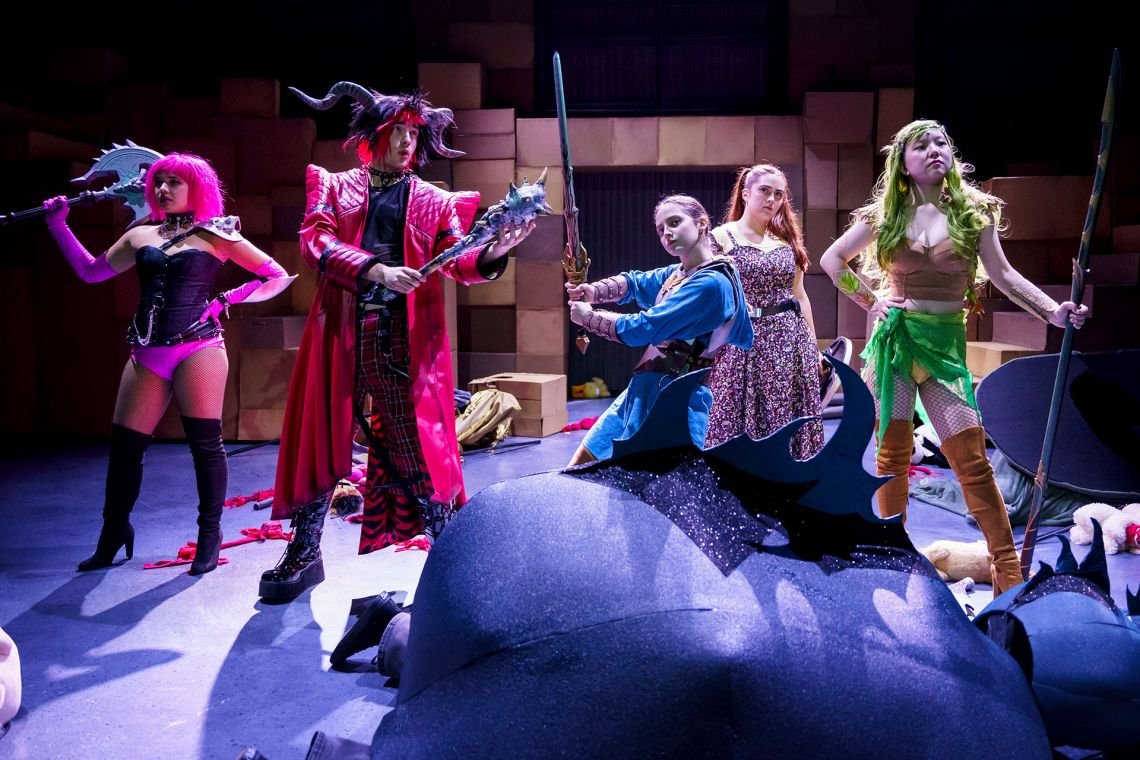
A scene from “She Kills Monsters” Photo by John West/Trinity College
by Chris Peterson
This month, at Copley High School in Ohio, students had already been cast in She Kills Monsters and had started rehearsals when the school canceled the production. A parent of a cast member had complained about the play’s LGBTQ content. Superintendent Aimee Kirsch acknowledged receiving the complaint but said the production hadn’t gone through the proper administrative review.
The show was canceled and replaced with Alice in Wonderland (good lord), but the students have rallied and raised enough money to stage She Kills Monsters at a local theatre.
First off, good for the students. This is amazing, and I hope they win some type of award in their community for doing this.
Still, this story has been bugging me more than most of the stories we publish.
I keep coming back to the same question with these canceled high school productions: why does the parent who complains seem to have greater influence than all the parents who were perfectly happy to let their kids participate?
We’ve seen this before. At Indiana’s Mississinewa High School, Between the Lines was canceled in 2025. Author Jodi Picoult said a single parent’s objection had cost students their production. At Herriman High School in Utah, a parent’s complaint prompted the cancellation of All Shook Up, but the decision was later reversed after authorized changes were made.
And every parent knows this type of decision-making happens at K-12 schools across the country concerning more than just theatre. 99% of parents are fine with a school's decision, but a handful complain, and that is that.
Of course, parents should be able to raise concerns. I’m a parent. I want someone to listen if I have a question about what my child is doing at school. But listening to me doesn’t obligate the school to give me what I want. And my authority over my child does not extend to every other child in the cast.
What about those families? Some of them read the script, discussed it with their kids, and supported their participation. Why should their judgment count for less because they didn’t send an angry email?
If a parent doesn’t want their kid involved in She Kills Monsters, fine. Pull them out. Don’t have them attend the show. Let the other kids whose families are fine with this enjoy it..
But as I write this, I know the reason why. Schools will do anything to avoid dealing with even one angry parent because, in part, one parent can bring a lawsuit or news coverage that would be an even bigger headache than canceling a play during rehearsals.
That said, schools need to consider what they’re teaching people when they respond this way. The next person who dislikes a show now knows a complaint might be enough to get it pulled. Directors have reason to avoid material they otherwise believe in. In an age of national polarized politics infiltrating local decision-making, one parent with a MAGA agenda can ruin the production of any play with even the slightest of progressive messaging.
That’s a dangerous precedent to keep setting. But, let’s just be blunt; this is cowardice. Administrators are prioritizing their own comfort over what’s best for the school. Yes, I know, being a school administrator is a thankless job. I wouldn’t want it, and I am glad others do.
But part of a thankless job is making the decisions that are right for the school precisely because it won’t get thanks.
As a performer, sometimes you get heckled or booed. Some performers wilt under that pressure, but others, particularly the good performers, keep trucking through. I had one performer tell me that heckling fueled them to shine on stage so they could quietly embarrass the heckler in the minds of the 99% of the audience who were respectful.
That’s a lesson many schools could learn from.