The Cynthia Erivo “Dracula” Teleprompter Talk is Bigger Than it Needs to Be
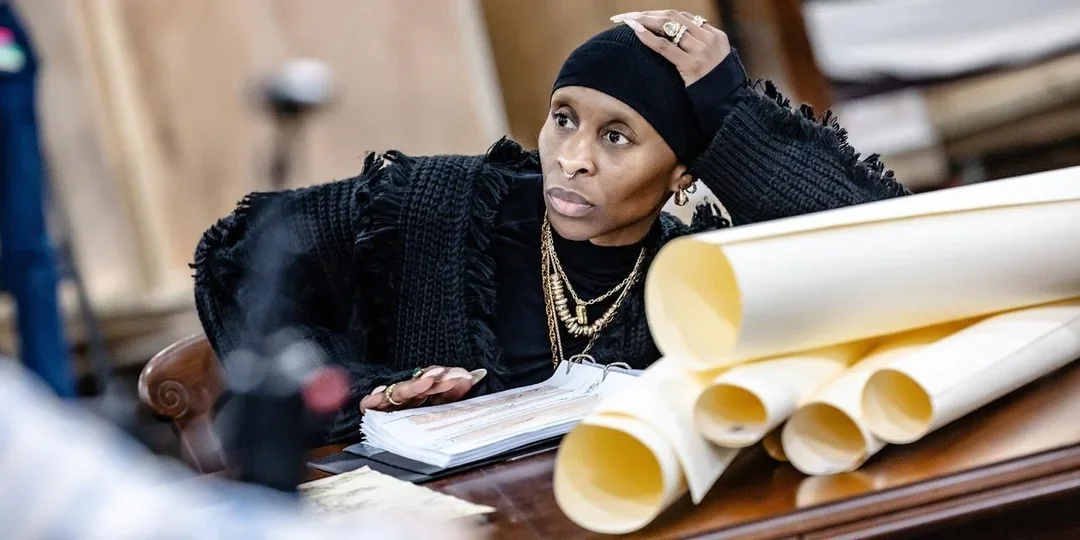
by Chris Peterson
There’s a version of this story that’s easy to write: “Cynthia Erivo used autocue in Dracula, theatre is doomed, get the pitchforks.”
I’m not writing that version.
Yes, the reports are out there. I haven’t seen the show myself, but audience members have complained that teleprompter use was visible during Erivo’s one-person Dracula on the West End, with some people publicly demanding refunds and questioning premium ticket prices. That reaction is real, and it shouldn’t be dismissed out of hand.
But if we’re going to talk about this like adults, let’s separate two things that keep getting mashed into one outrage smoothie.
Thing one: Cynthia Erivo taking on a wildly difficult one-person show where she plays 23 roles.
Thing two: The production apparently letting an audience-visible cue system become part of the viewing experience.
Those are not the same problem.
I’m not interested in dunking on the performer here. A one-actor, multi-character show with this level of technical precision is a beast. This production has been marketed from day one as a high-concept solo event with Erivo carrying all 23 characters over roughly 1 hour and 50 minutes.
That’s not “standard lead role” difficulty. That’s “don’t blink or the train jumps the track” difficulty.
So no, I’m not scandalized that support exists.
What I am criticizing is this: if the support is visible enough that audience members are tracking it, then the show has handed them a distraction it never needed to hand them. In a one-person piece, focus is the currency. You can’t afford to spend it on “where is she reading from?”
And this is where direction matters. Kip Williams has already built a reputation on tech-integrated solo storytelling, especially with The Picture of Dorian Gray, which leaned heavily into live camera language, rapid visual edits, and screen-forward form. That’s his vocabulary.
So if Dracula is operating in that same ecosystem, fine. Great, even. I like bold form when it serves the story. But ambitious tech only works when it disappears into the show.
And before anyone says, “Well, then audiences should just be nicer,” let me stop you there. People paying serious West End prices are allowed to expect immersion. They are also allowed to be annoyed when staging choices pull them out of the narrative. That isn’t anti-artist. That’s normal audience response.
At the same time, the rush to turn this into a referendum on Erivo’s talent is lazy and unfair. This is an artist with a proven track record on stage and screen, stepping into a brutally demanding theatrical experiment. One rocky headline, especially in an early run that already dealt with schedule turbulence before opening, doesn’t erase the larger reality of what she’s doing.
So here’s my take, clean and simple:
Defend Cynthia. Critique the visible prompt execution. Ask the production to fix the sightline problem fast.
Because this is the part people forget when discourse gets loud: this specific issue is fixable. Re-block, re-angle, re-mask, recalibrate—whatever the team needs to do so the cueing support does its job without becoming a second performance. The audience came for Dracula, not for accidental behind-the-scenes.
I want big swings in theatre. I want artists to try difficult, dangerous, weirdly modern forms. I want directors who push. I want stars who say yes to insane assignments. But if you’re going to build a technical cathedral, don’t leave the scaffolding in the sightline.