‘Hell’s Kitchen’ Korean Production Prompts Debate Over Dreadlocks and Blackface Claims
by Chris Peterson
The upcoming Korean production of Hell’s Kitchen has found itself in the middle of an online conversation before it has even opened.
The production, scheduled to begin performances at the GS Arts Center in Seoul this summer, is billed as the first non-English-language licensed production of Alicia Keys’ Broadway musical. That alone makes it a significant moment, not just for Korean musical theatre, but for the global life of a show rooted so clearly in Black American music, culture, and identity.
The musical, loosely inspired by Keys’ own life, follows Ali, a 17-year-old girl growing up in the Hell’s Kitchen neighborhood of Manhattan in the 1990s. Raised by her protective single mother, Ali is restless, talented, and desperate to find her own voice. Through music, first love, and a complicated relationship with her mother, the show explores identity, ambition, family, and the cultural energy of New York City.
That context matters here because Hell’s Kitchen is not just a jukebox musical built around Alicia Keys songs. It is a coming-of-age story shaped by Black American music, style, and experience. So when a production in another country stages that world, the visual choices are naturally going to receive attention.
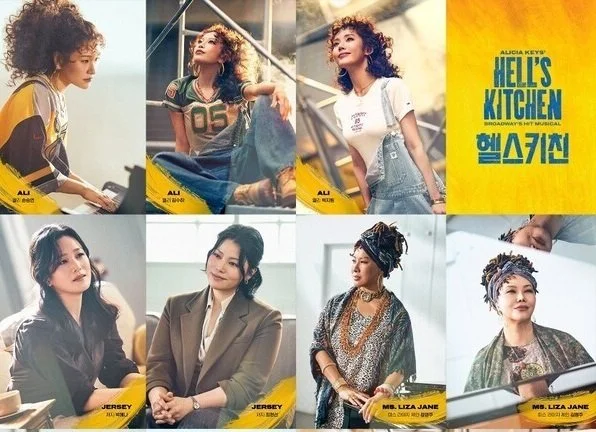
The controversy appears to center on promotional images for the Korean cast, in which one character’s hair and styling have drawn online criticism. Some social media users have pointed specifically to what appears to be dreadlocks, with some going further and calling the look blackface.
That is obviously a serious charge, and it should not be thrown around casually. It is also not one that should be dismissed simply because a production is happening outside the United States.
And this is where the conversation gets more complicated than a few angry comments online.
The character design in question is that of Miss Liza Jane, which is being play Jeong Yeong-ju and Kim Yeong-ju. One important piece of context is Alicia Keys’ reported involvement in the Korean production. According to Korean press coverage, Keys was personally involved in casting and provided guidance on the production's direction. That matters.
Because the natural question is this: if Alicia Keys herself was involved in the production and did not appear to object to these design choices, should audiences still be concerned?
That is a fair question.
I am Korean. I am not Black. So, I am not going to sit here and declare, from some self-appointed throne of theatre commentary, what some Black audiences should or should not find offensive. That would be arrogant, and frankly, not very useful.
If some Black theatre fans, artists, or audience members feel uncomfortable with these images, that should be taken seriously. Dreadlocks are not just a costume piece. Hair has cultural meaning. In this context, with this show, those choices were always going to invite scrutiny.

At the same time, I do think it is fair to ask whether every visual reference to Black style or culture automatically becomes blackface. Historically, blackface refers to a very specific racist performance tradition built on caricature and mockery. Whether this design crosses that line is exactly what people are debating. But even if someone does not believe it fits that historical definition, there can still be valid questions about cultural sensitivity, representation, and whether a production has handled the material with enough care.
That, to me, is the more interesting conversation than simply shouting people into corners.
The global expansion of Broadway musicals is exciting. It is also messy. When a show deeply connected to Black American identity is produced in another country, the design choices carry extra weight.
So no, this is not a conversation that should be dismissed. It also doesn't need to be flattened into the easiest possible outrage.
Maybe this production handled the design with more thought than a few promotional images can show. Maybe the criticism is pointing to something the production should have anticipated. Maybe both things are true.
The only thing I know for sure is that when a musical like Hell’s Kitchen travels the world, it does not leave its cultural context at customs. It should start thoughtful conversations and make everyone think; I know it did for me, and I hope it will do the same for all the readers.