If the Audience Laughs at the Wrong Moment, That Might Be on the Director
by Chris Peterson
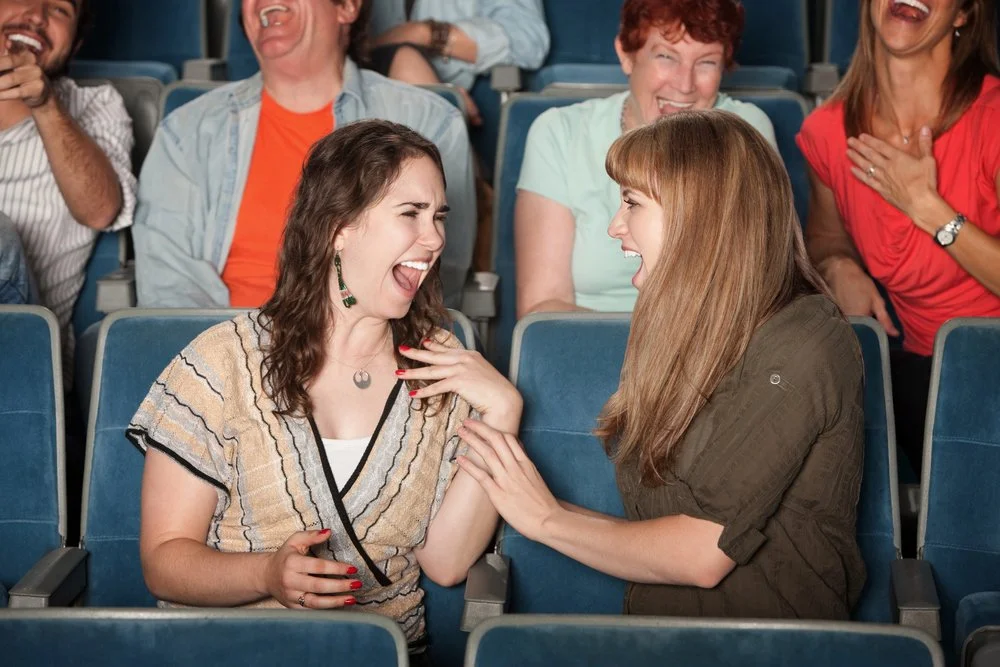
There’s been some pearl-clutching lately over Broadway audiences laughing at the “wrong” moments.
The Wall Street Journal recently pointed to audiences laughing during Gruesome Playground Injuries, a play dealing with addiction, loss, self-harm, and physical trauma. It also cited similar reactions to Job, with its themes of mental illness, violence, sexual abuse, and trauma; and The Fear of 13, in which Adrien Brody plays a wrongfully convicted man on death row. And sure, sometimes audiences are wrong.
But sometimes people laugh because they’re uncomfortable. Sometimes they laugh because they don’t know how to process what they’re watching. Sometimes they laugh because, frankly, some audience members behave like they were raised in a comments section.
As a director, I have to say this:
If the audience laughs at an inappropriate moment, my first instinct should not be to blame them. It should be to ask what I did to make that laugh possible.
Whether we admit it or not, a production teaches an audience how to watch it.
I learned that directing Steven Dietz’s Private Eyes, a play that is constantly playing with truth, performance, betrayal, and perception. It’s funny, until suddenly it isn’t. Or at least, that’s the trick. The audience has to be invited into the game, but they also have to know when the game has teeth.
That was one of the hardest parts of directing it. If I leaned too far into the comedy early on, I risked giving the audience permission to treat every lie, every emotional dodge, every act of cruelty as part of the joke. Then, when the play turned and asked for something more serious, I couldn’t really blame the audience if they kept laughing. I had trained them to.
And that’s the point.
If I spend the first half-hour telling an audience that awkwardness is funny, cruelty is funny, discomfort is funny, and then suddenly expect them to know exactly when the comedy has stopped, that’s not necessarily their failure.
That may be mine.
Directing is not just moving people around the stage and finding a nice-looking picture before intermission. It’s managing permission. When do we allow the audience to laugh? When do we make that laughter curdle? When do we pull the rug out from under them?
That’s craft. And sometimes we don’t get it right.
This doesn’t mean audiences get a free pass. Bad behavior is still bad behavior. Loud, performative, attention-seeking laughter can absolutely ruin a moment. And yes, sometimes one audience member is just one audience member. One awkward laugh might be discomfort. One badly timed cackle might be someone not understanding the moment. One person laughing at the wrong time might simply be one person laughing at the wrong time.
But if it keeps happening?
If multiple audiences keep laughing in the same place, night after night, then at some point, that stops being an audience problem and starts becoming a production note.
Sometimes it’s feedback.
And if a room full of people laughs where I wanted silence, my job isn’t to scold them from the rehearsal room.
My job is to go back and figure out why. And if a room full of people laughs where I wanted silence, my job isn’t to scold them from the rehearsal room.