Broadway Loves a Redemption Arc, Especially for Powerful Men
by Chris Peterson
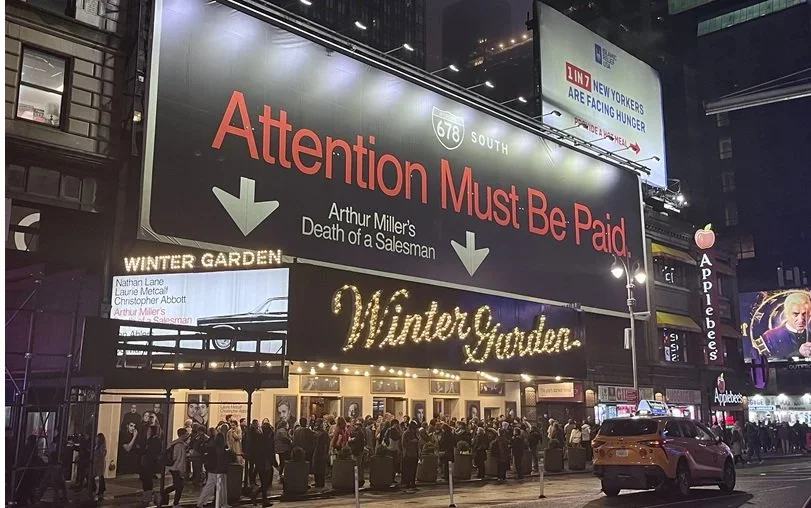
In a new Variety interview about the newly Tony-nominated Broadway revival of Death of a Salesman, director Joe Mantello discussed a number of things, which I’ll get to, but the major line that will probably get the most attention is Mantello saying with regard to working with Scott Rudin: “I believe in second chances.”
Here is the full quote:
“I would be lying if I said it wasn’t tricky or that I didn’t grapple with making that decision. [Pause.] Without sharing private conversations, I will say I do believe in accountability, and I think Scott has spoken about taking responsibility. We talked about that, too. I believe in second chances. I know other people don’t share that belief, and that’s their right. “
The pause is fascinating, but let’s hold on that for a second. I believe in second chances. I really do. I am not sitting here demanding that anyone be exiled to a remote island.
But at some point, “second chance” has to mean more than “I really want to work with my famous friends.”
That is the part that keeps sticking in my throat with this whole Rudin re-entry. We keep hearing words like rehabilitation, growth, accountability, and reflection. But the actual public evidence of that work still feels awfully thin.
In 2021, after former employees alleged abusive workplace behavior, including accounts of objects being thrown and one assistant’s hand reportedly being injured by a computer monitor, Rudin apologized for “the pain my behavior caused” and said he would step back from his Broadway productions. He later resigned from the Broadway League, saying, “I know apologizing is not, by any means, enough,” and that he intended to “work on my issues.”
Fine. That is a start.
But what has the public actually seen since then? A step back. A resignation. A few statements. A later return. There has been no widely visible public accounting of who was harmed, who received apologies, what structural safeguards are now in place on his productions, or how former employees would be protected from the same behavior if he resumed producing.
So when people now say he has apologized, gone to therapy, reflected, or entered “rehabilitation,” my response is not that none of that matters. Of course it matters. My response is: “Okay, and?” What does that mean beyond the private circle of people already willing to work with him again?
Because right now, the public-facing version of accountability still looks less like a full repair process and more like Broadway’s favorite old trick: wait long enough, get enough respected people to stand by you, and hope everyone stops asking follow-up questions.
But what also makes this especially interesting is the conflicting narrative around Steppenwolf and Little Bear Ridge Road(which also received a Tony nomination this morning for Best Play), Rudin’s previous Broadway project. That play began at Steppenwolf, but the company ultimately was not involved with the Broadway transfer. Publicly, that has been framed as Steppenwolf not wanting to be the institution that helped usher Rudin back to Broadway.
On paper, that sounds like a values-based decision. This is a theatre saying, essentially, “We are not comfortable lending our name to this comeback.” And that would be a perfectly reasonable line to draw.
But then Variety adds a pretty important wrinkle. According to Mantello in the interview, Steppenwolf’s co-artistic director Glenn Davis allegedly told him: “I think Scott Rudin is the best producer for this play. We just can’t be the first to work with him.”
Steppenwolf denies that version of events. David Rosenberg, a spokesperson for Steppenwolf, told Variety, “We are not sure where this is coming from. I can confirm that no one on leadership at Steppenwolf said this.”
In the same interview, Laurie Metcalf, who has previously defended Rudin, backed Mantello’s account of the conversation with Steppenwolf about Rudin. She issued the following statement:
“I was on this call with Joe and Glenn and can very much confirm that the way it’s been described is accurate, and I stand by that account of what was said at the time.”
For what it’s worth, I’m inclined to side with Steppenwolf here.
Not because institutions are always noble. Please. Theatre institutions have issued enough carefully massaged statements over the years to wallpaper a very anxious lobby. But in this case, Steppenwolf’s denial is clear, direct, and on the record. And frankly, the idea that the company would be cautious about lending its name to Rudin’s Broadway comeback does not exactly require a wild leap of imagination.
Also, even if there were people inside the organization who felt differently, that would not make Steppenwolf’s eventual position meaningless. What matters is where the institution ultimately landed. And, as far as we know publicly, Steppenwolf did not attach itself to Rudin’s return.
That matters.
Mantello further doubles down by criticizing the anonymous aspect of Steppenwolf’s statement against Rudin. When asked why he keeps emphasizing the anonymous nature of Steppenwolf’s statement and why it matters, Mantello said:
“Of course it does because that removes any nuance. Then you can’t say, ‘Did this person have an agenda?’ Or ‘does this person have unimpeachable credentials?’ in which case, put your name behind your quote. I’m telling you the truth about how I feel about working with Scott, and my name is going to be on what I say. It was interesting that it was the only anonymous source in the entire piece. My question is, why?”
Well, here’s one reason why: because Scott Rudin has a history of petty vendettas against people who have wronged him (including us?)
This is why Mantello’s “I believe in second chances” lands so uneasily. It sounds lovely. It is the kind of sentence everyone wants to applaud because it makes us feel merciful and mature. But a second chance should not be a backstage pass handed out by people who were already comfortable sharing the room with you.
A second chance should come with transparency, with some attempt at amends.
The powers-that-be in this industry love the language of accountability when it is useful, usually in panels, grant applications, and opening-night speeches where everyone nods very seriously over tiny plastic cups of wine. But when accountability actually requires telling a powerful person, “Not yet,” the conversation suddenly gets softer. Then come the words like grace, nuance, complexity, and second chances.
Funny how nuance always seems to show up right when the richest person in the room needs it.
Because let’s be honest. The theatre industry is not exactly known for handing out endless second chances to assistants, early-career artists, stage managers, interns, or anyone whose contact list does not include a few Tony winners. Forgiveness has always had a very selective guest list.
If you are powerful enough, your mistakes become “complicated.” If you are not, they become the reason people stop returning your emails.
That is what makes this whole thing feel so gross. Not because people cannot change. They can. Not because second chances should never happen. They should. But because Rudin’s path back seems to be paved with the same power structures that protected him in the first place.
So yes, Mantello may believe in second chances. Many of us do. But the question is not whether second chances exist. The question is who gets them, who grants them, what they cost, and whether any real accountability happened before the curtain went back up.
Remember the pause in the opening quote about how he believes Rudin earned a second chance? Mantello says in the Variety article that he believes Rudin has changed, but gives no details on how.
He had a forum to go on the record for what Rudin shared with him that convinced him of the need for a second chance, and hid behind “private conversations”, as if Rudin wouldn’t want him to shine a positive light on him.
Come on.
Because here is the thing: if the only lesson Broadway learned from the Rudin era is “wait a few years, get some respected artists onboard, and call it complicated,” then congratulations, everyone. The industry has once again confused growth with good PR.
And that feels less like a second chance and more like the same old first chance, just wearing a nicer suit.