by Chris Peterson
For a period in the mid-to-late 2010s, it was nearly impossible to spend time in an online theatre community without encountering Theatre Nerds. Its articles appeared constantly on Facebook. There were personality quizzes, audition-song recommendations, rankings of Broadway characters, lists of things only theatre kids would understand, and collections of memes built around Hamilton, Les Misérables, and whichever musical was dominating the conversation that week.
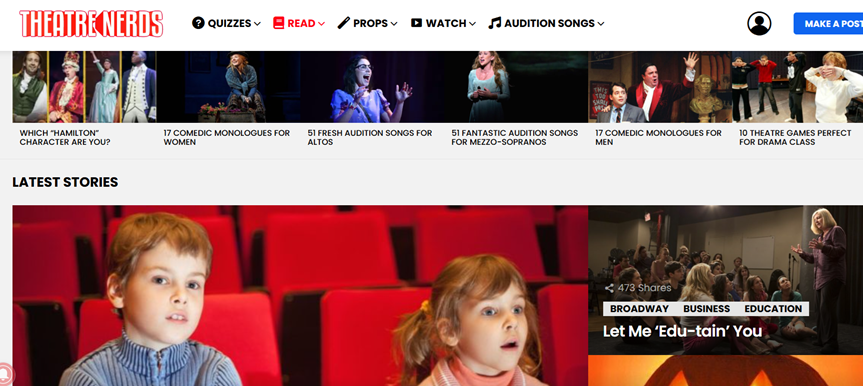
At the time, I viewed Theatre Nerds as OnStage Blog’s most direct competition.
We were both trying to reach the same broad audience of students, educators, and community theatre artists who were often overlooked by the major theatre publications. Our approaches were different, but Theatre Nerds’ rapid growth and enormous social-media reach made it impossible not to pay attention.
Then, almost out of nowhere, Theatre Nerds simply stopped publishing new content. Looking back at the homepage now is like opening a time capsule from a specific era of digital publishing. Even the articles still circulating through its Facebook page are not new. Many were published years ago and are simply being recycled from the site’s archive.
So how did one of the most popular theatre websites of its era disappear so completely?
A Publication Built for Sharing
Theatre Nerds was founded by Ben Bailey with the goal of creating an online community for people who love theatre.
The site described itself as a place that could unite thespians regardless of their age, location, skill level, or professional goals. It invited them to share their fandom and what it called “general tomfoolery.”
That mission was broad enough to include almost anything connected to theatre.
Theatre Nerds essentially became, and I promise this is not meant as an insult, the BuzzFeed of the theatre publication world.
BuzzFeed understood better than almost anyone how people used the internet during that era. Readers did not simply consume articles. They shared them to say something about themselves.
A quiz telling you which Hamilton character you were gave you something to post. A list of problems only community theatre actors understood gave people a reason to tag their castmates. An article celebrating theatre teachers could be shared by students, parents, and entire drama departments.
Theatre Nerds took that formula and applied it directly to a community that already loved inside jokes, shared experiences, and public displays of enthusiasm.
It worked remarkably well.
And to be honest, I was jealous of its meteoric rise.
At its height, the Theatre Nerds Facebook page had amassed at least 250,000 followers. Individual articles generated engagement numbers that would have been impressive for a much larger entertainment publication. “The Importance of Theatre Teachers” displayed 55,500 shares, while “10 Reasons Why You Should Expose Your Child to Theatre” showed more than 98,000.
Those were not small numbers for an independent theatre website. They were the kind of numbers that could make another publisher wonder what Theatre Nerds understood about the audience that everyone else had missed.
From the outside, it looked like a publication with momentum. It had a recognizable brand, a large social audience, a growing archive, and a steady stream of content designed to travel beyond the website itself.
Then, around 2020, the publishing slowed. Eventually, it stopped almost entirely.
That is the part of the story that remains difficult to explain, because you can’t blame the pandemic. As horrible as the initial months of the pandemic were for humanity, every other theatre site, including ours, was publishing content regularly and seeing typical or even higher traffic and engagement.
How does a publication with hundreds of thousands of followers, articles generating tens of thousands of shares, and a contributor network suddenly stop producing new work?
Was there an internal decision to wind things down? Did the business model stop working? Did leadership simply move on? Was there ever a formal moment when Theatre Nerds ceased operating as an active publication?
There does not appear to have been a public announcement answering those questions.
The Facebook Page That Refuses to Die
Curiously, the Theatre Nerds Facebook page has never gone completely silent.
It continues to post links daily, but there is little evidence that anyone is actively producing or curating new editorial material. Instead, the page appears to recycle articles from the site’s long-dormant archive, including pieces written nearly a decade ago.
The page now seems to be operating on autopilot, endlessly pulling old articles from Theatre Nerds and sending them back into Facebook.
There is something almost haunting about that.
The writers have moved on. The editors appear to be gone. The website is slowly breaking. Yet the Facebook account keeps posting as though nothing has changed.
It is as if some cursed robot has been assigned to recycle Theatre Nerds articles for eternity, unaware that the publication it is promoting effectively disappeared years ago.
From a distance, Theatre Nerds can still look alive. A follower might see a link in their feed and assume that the publication is operating normally.
Click through, however, and they may find an article written nearly a decade ago, missing images, featuring broken functionality, or containing an error message where the content used to be.
Some links now lead to raw data or technical error pages. Readers are encountering messages such as, “This XML file does not appear to have any style information associated with it. The document tree is shown below.”
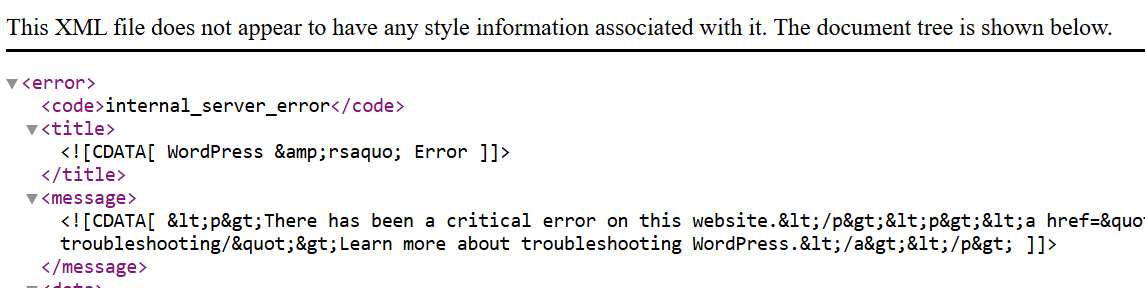
Error message when trying to access Theatre Nerds content from Facebook.
That warning generally appears when a browser is displaying a raw XML file rather than a properly functioning webpage. In this case, it is another indication that links, media files, site templates or server configurations are no longer being maintained consistently.
Also trying to access the site on mobile, I got this error message.
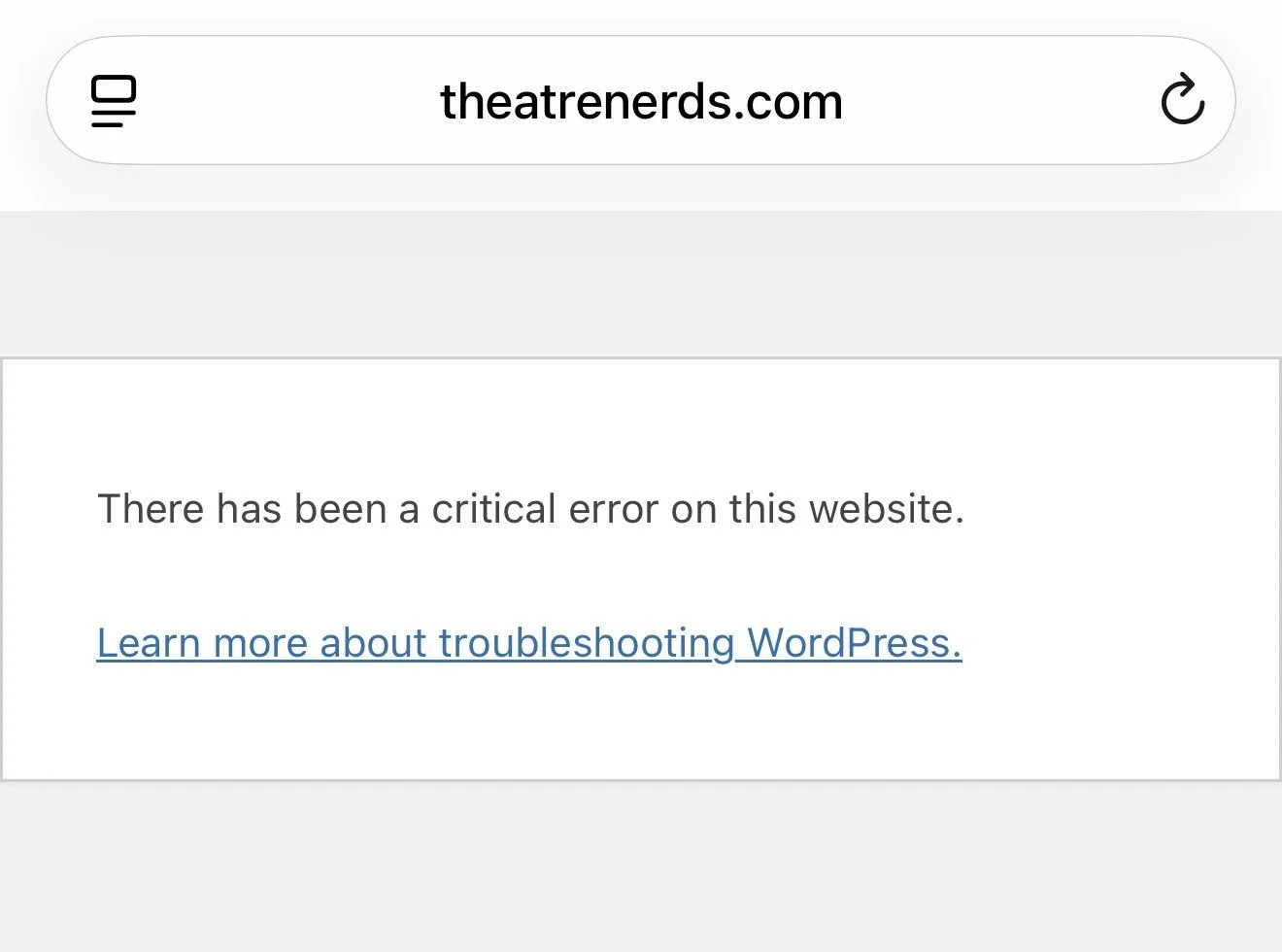
Content is beginning to disappear in pieces. This is what the death of a digital publication can look like when no one formally shuts it down.
There is no final issue to preserve. There are no boxes of old magazines in a warehouse. There may not be a complete physical archive anywhere.
There are only files on a server, and each year more of them become inaccessible.
We Tried to Partner With Theatre Nerds
Now, I’m about to break some news. Hope you’re sitting down.
I had a few brief interactions with Ben Bailey during Theatre Nerds’ most active years. We were never close, but we knew of each other and crossed paths professionally at BroadwayCon.
Bailey would later step down as Editor-in-Chief and hand the reins to Rich Damaso.
That history was part of why, over the last few years, as Theatre Nerds’ inactivity became increasingly apparent, I reached out multiple times to Damaso to ask whether anyone there might be interested in a partnership that could bring the publication back to life.
I legitimately thought I could help. The theatre-media space was better when Theatre Nerds was actively publishing.
The idea was not to strip the site for its remaining traffic or redirect every surviving link to the OnStage Blog homepage. We were genuinely interested in resurrecting it. And yes, had they been open to selling, we would have happily entered into negotiations.
With active leadership, updated technology, and a clearer editorial strategy, I believed the site could have had a second life.
No one at Theatre Nerds ever responded.
I do not know whether they saw our messages, whether they had any interest in working with us, or whether ownership, financial, or legal complications would have made a deal impossible.
Since we never had a conversation, I do not want to invent a reason for their silence.
Still, the lack of a response felt consistent with the larger mystery surrounding Theatre Nerds. The publication was no longer producing meaningful new content, yet no one appeared ready to close it, sell it, or rebuild it.
In the end, Theatre Nerds Did Matter
It would be easy to dismiss Theatre Nerds because much of its content was light.
Some articles were built around familiar theatre jokes or obvious search terms. The quizzes and numbered lists could become repetitive.
Still, the team at the site understood something important. A huge portion of the theatre community was not being served by traditional theatre journalism.
At the time, the major theatre publications tended to focus on Broadway news, celebrity interviews, reviews, box-office figures, and industry announcements. Theatre Nerds spoke directly to fans who might never work professionally but still considered theatre a central part of their lives.
That’s why I viewed Theatre Nerds as genuine competition. I watched its rapid growth with a mixture of admiration and competitive anxiety. I admit, I miss checking it daily to see how I could compete.
Theatre Nerds did not disappear because people stopped caring about theatre content. If anything, its success proved just how large and engaged that audience could be.
That may be the strangest part of the story. Theatre Nerds did not fail to find an audience. It found one that most publications would envy.
It decided to simply fade away.
*Title Photo illustration incorporating the Theatre Nerds logo. The image is used for editorial commentary and is not affiliated with or endorsed by Theatre Nerds.