These Plays Are Now in the Public Domain. Theatres Should Take Advantage
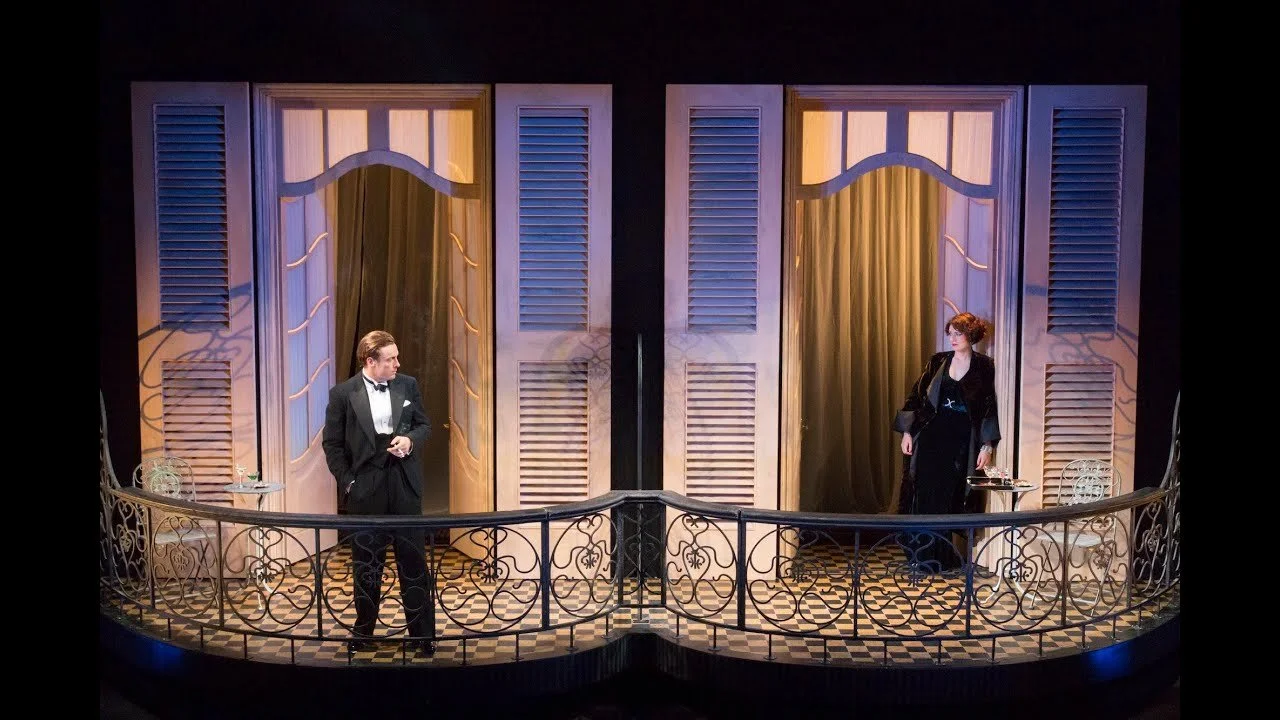
Private Lives (Photo: Digital Theatre)
by Chris Peterson
A reader of OnStage Blog recently suggested that I take a closer look at which plays are entering the public domain over the next couple of years.
I’m glad they did, because there are some surprisingly major titles on the list.
For this, I looked at information from Duke University’s Center for the Study of the Public Domain, which publishes an annual rundown of works entering the public domain, along with U.S. Copyright Office guidance on copyright terms.
As of January 1, 2026, works published in 1930 entered the public domain in the United States. That includes Noël Coward’s Private Lives, one of the most enduring comedies of the 20th century and one of the works specifically highlighted by Duke’s Center for the Study of the Public Domain. I had the chance to direct Private Lives years ago and absolutely loved working on it. From that experience, I’d definitely encourage other theatres and directors to take it on.
And Private Lives isn’t alone.
George S. Kaufman and Moss Hart’s Once in a Lifetime, their Hollywood satire about the chaotic arrival of talking sound in movies, was published in 1930 as well. Suddenly, we’re talking about recognizable, historically significant plays that theatres can potentially produce without the licensing costs traditionally attached to copyrighted material.
For community theatres, colleges, and smaller professional companies operating on increasingly tight budgets, that’s worth noticing.
And 2027 could be even more interesting.
Under current U.S. copyright law, works from this period can receive a maximum copyright term of 95 years. That means eligible works first published in 1931 will enter the public domain on January 1, 2027.
Among them is Eugene O’Neill’s massive Mourning Becomes Electra, his three-part reworking of the Oresteia set in New England after the Civil War. It follows the wealthy Mannon family after Ezra returns home from the war to a wife in love with another man, setting off a chain of murder and revenge that pulls their children, Lavinia and Orin, into the same destructive cycle.
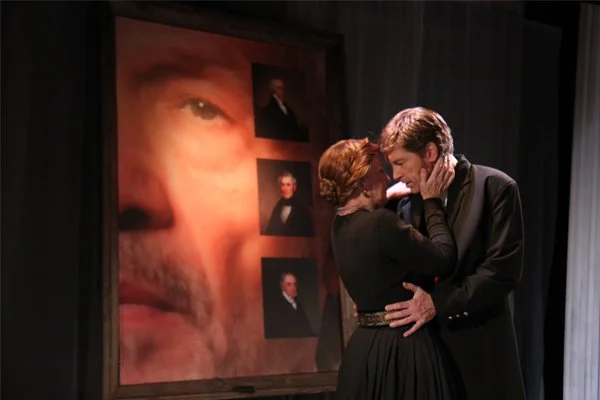
Mourning Becomes Electra (Photo: Remy Bumppo Theatre Company)
Thornton Wilder’s The Long Christmas Dinner and Other Plays in One Act was also published that year. Its title play follows one family across roughly 90 years of Christmas dinners, with generations entering and leaving the dining room as births, deaths and marriages reshape the family in unexpected ways. It’s simple, moving, and still feels remarkably modern in the way it plays with time.
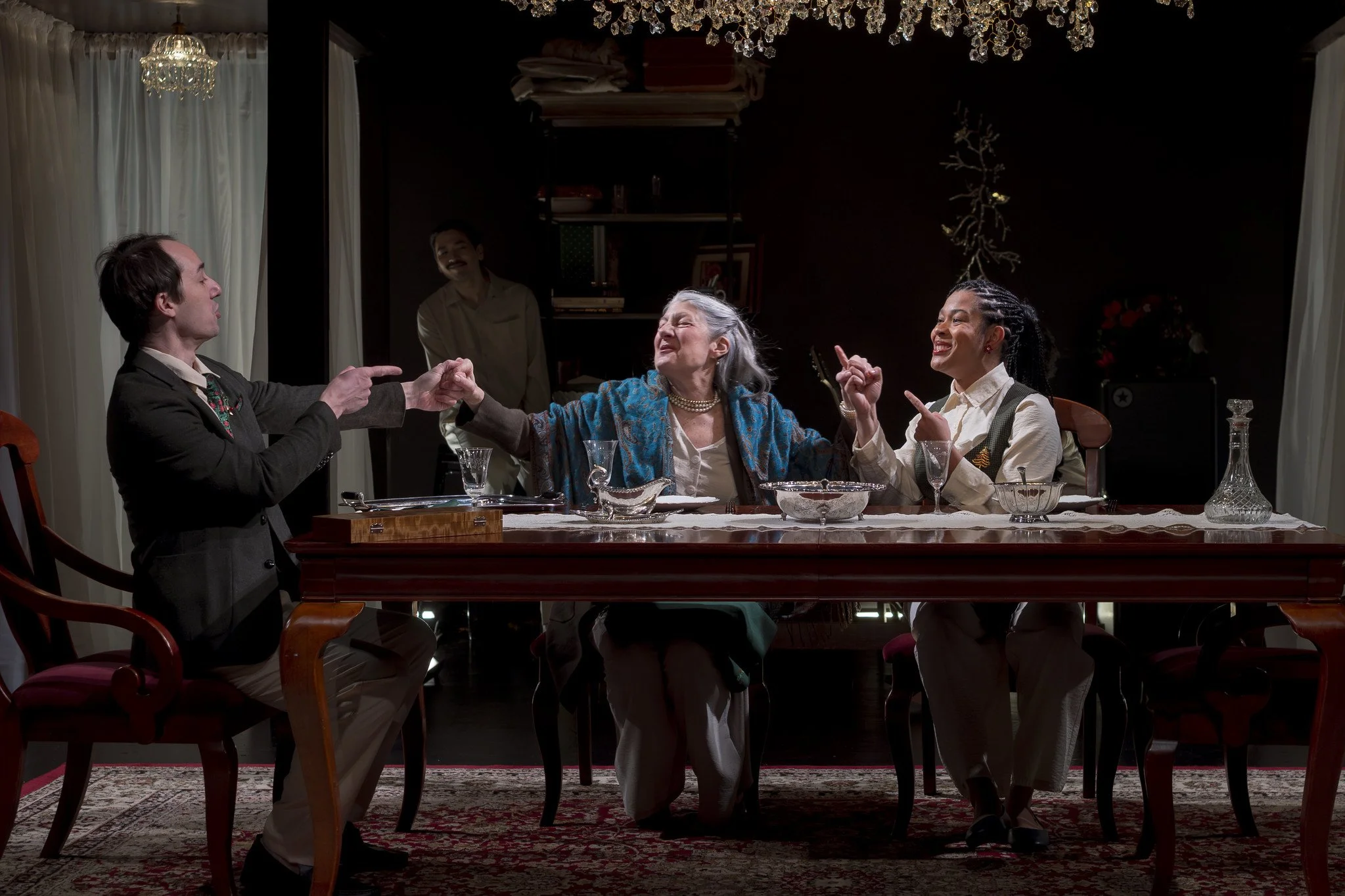
The Long Christmas Dinner (Photo: Logan and Candice Lee Conner, Oomphotography)
Elmer Rice’s Counsellor-at-Law centers on George Simon, a hugely successful New York attorney who rose from poverty on the Lower East Side. His career is suddenly threatened when it comes to light that, years earlier, he crossed an ethical and legal line to save a young client from prison. At the same time, his marriage begins falling apart, leaving Simon facing the possibility of losing nearly everything he built.
Rice also wrote The Left Bank, about American writer John Shelby and his wife Claire, who are living an expatriate life in a less-than-glamorous Paris hotel. John insists America is culturally empty and dreams of becoming a serious writer, while Claire increasingly wants to return home and reunite with their son. When another American couple arrives and an affair develops, Rice uses the relationships to poke at romantic notions about escaping America for the supposedly freer artistic life of Paris.
Philip Barry, best known to many theatre audiences for The Philadelphia Story, has Tomorrow and Tomorrow, a more serious romantic drama. Eve Redman is an intelligent but unfulfilled woman living with her well-meaning husband in a Midwestern college town when psychologist Nicholas Hay arrives to lecture at the local university. Nicholas awakens something in Eve that has been missing from her marriage, and their relationship develops into an affair with consequences that make the play surprisingly daring for something written in 1931.
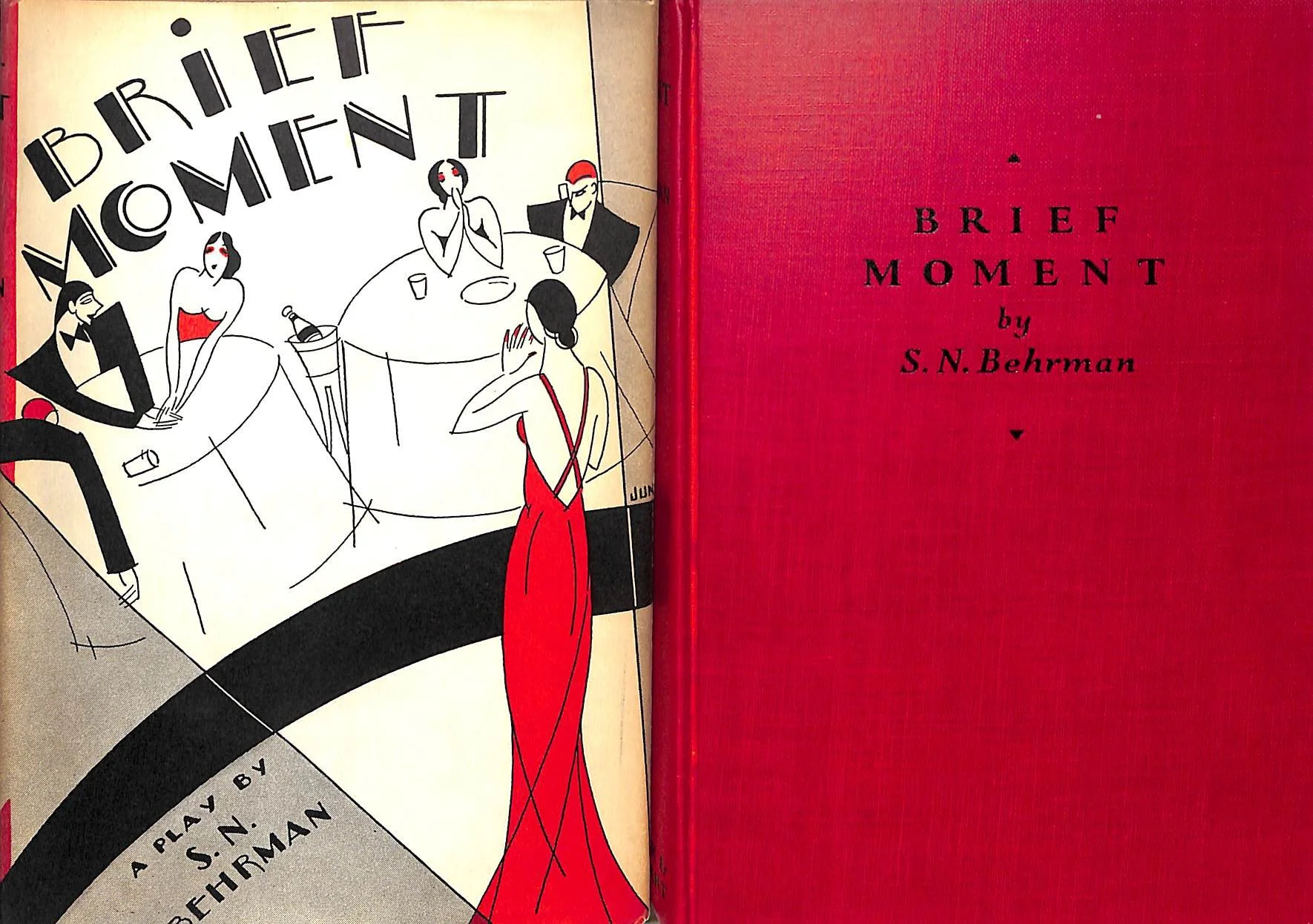
There’s S. N. Behrman’s Brief Moment, which follows a wealthy playboy who falls for and marries a nightclub singer. She quickly becomes frustrated with his refusal to take anything seriously and pushes him to actually do something with his privileged life. Their marriage, separation and eventual attempts to figure out what they really want give the comedy a little more underneath the surface than simply watching a spoiled rich guy behave badly.
Then there’s Lynn Riggs’ Green Grow the Lilacs, the play that Rodgers and Hammerstein later used as the basis for Oklahoma!. And before anyone gets too excited, no, this does not mean you can suddenly perform Oklahoma! without paying Rodgers & Hammerstein.
Nice try.
But the Riggs play itself potentially becoming available opens some fascinating possibilities. A theatre could revisit the original material, create a very different adaptation of it, or use it as the starting point for something new without needing permission to use the underlying public-domain text.
That’s where this gets more interesting than simply saving money on royalties.
Public domain means artists can start being creative with these works.
Want to set Private Lives in 2026? Rewrite it around a different kind of couple? Create an immersive version? Tear apart Mourning Becomes Electra and rebuild it into something contemporary?
Go for it.
There is an important caveat. Public-domain status applies to the underlying eligible work. A newer acting edition or other copyrighted material may still be protected. Theatre companies should make sure they know exactly which version they’re using before declaring the licensing budget officially dead.
It’s also why I’d recommend that any theatre considering a production verify the specific text and edition it intends to use rather than assuming every version of a newly public-domain play is automatically free and clear.
Still, I think this is an opportunity theatres should look to more.
Producing theatre isn’t getting any cheaper, and licensing fees can be a significant part of the equation, especially for schools, colleges, and community theatres working with limited budgets. So when great plays become available without those restrictions, that should at least get our attention.
And maybe that’s the more exciting part of the public domain. These plays aren’t being put on a shelf as historical artifacts. They’re being handed back to artists.
Every January, another piece of theatre history becomes ours to revisit, rethink, adapt, and put back onstage. I’d love to see more theatres actually do something with it.