Kennedy Center Threatens to Sue Artist Over Protest Cancellation
by Chris Peterson
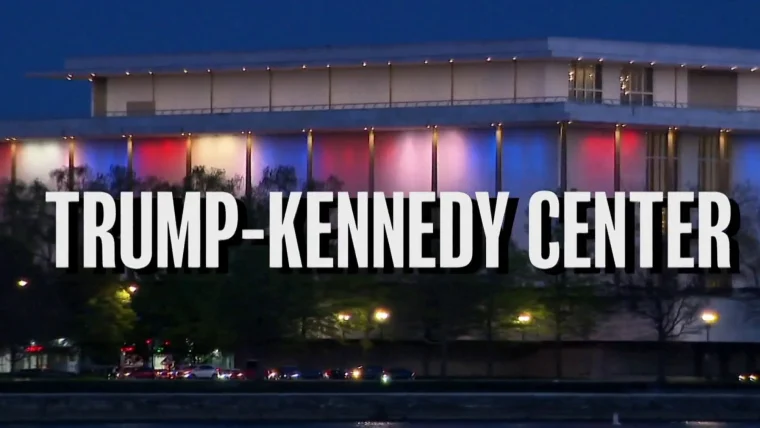
Reports this week say the Trump-Kennedy Center for the Performing Arts is considering legal action against jazz musician Chuck Redd, after he canceled his longtime Christmas Eve performance.
Redd’s reason was simple. He objected to the Kennedy Center adding Donald Trump’s name to the building, a decision made quietly by a board reshaped by Trump appointees.
The Kennedy Center’s response was not to acknowledge the discomfort artists might feel or to leave room for disagreement. It was to float a lawsuit, reportedly seeking up to $1 million, framing Redd’s cancellation as a breach rather than a protest.
The threat to file a $1 million lawsuit was expressed by Grenell, the center’s president, in a letter that was addressed to Redd and obtained by ABC News.
“Your decision to withdraw at the last moment—explicitly in response to the Center’s recent renaming, which honors President Trump’s extraordinary efforts to save this national treasure—is classic intolerance and very costly to a non-profit Arts institution. Regrettably, your action surrenders to the sad bullying tactics employed by certain elements on the left, who have sought to intimidate artists into boycotting performances at our national cultural center,” Grenell wrote to Redd.
“Your dismal ticket sales and lack of donor support, combined with your last-minute cancellation has cost us considerably. This is your official notice that we will seek $1 million in damages from you for this political stunt,” Grenell continued.
That is where this stops being just a news item and starts feeling deeply unsettling.
What is especially troubling here is the idea that an artist’s refusal to perform is being treated as something punishable. Jazz, of all art forms, has always been rooted in expression, resistance, and choice. It is music that grew out of people asserting their humanity in spaces that tried to deny it. Threatening to sue a jazz musician for following his conscience is not just tone deaf. It misses the entire point.
Much of the public posture around this has come from Richard Grenell, whose comments frame cancellations like Redd’s as intolerance or political bullying. That framing is revealing. It suggests an expectation that artists should simply show up, smile, and perform, regardless of how the institution itself has changed around them.
But artists are not props. Cultural institutions do not get to radically alter their identity and then act shocked when people respond.
Hovering over all of this, of course, is Donald Trump. Whether or not his name belongs on the building is something Congress and lawyers can debate. But the broader pattern is familiar. Public spaces absorb personal branding, dissent is treated as disloyalty, and power insists it is the real victim.
There is also a quiet irony here. This political world loves to rail against cancel culture, yet in this case, an artist is being threatened with financial punishment for opting out. If free expression only counts when it aligns with those in charge, it is not free at all.
What makes this harder to ignore is that Chuck Redd is not the only one stepping away. Other performances have been canceled. Audiences are uneasy. Trust is eroding. Once artists begin to see the Kennedy Center not as neutral ground but as a political statement, the damage is already done.
This did not need to happen this way. The Kennedy Center could have acknowledged disagreement. It could have respected an artist’s choice. It could have remembered that its role is to protect art, not police it.
Instead, it chose to escalate. In doing so, it sent a message that feels completely at odds with what the Kennedy Center is supposed to represent.
Art does not exist to validate power. Cultural institutions exist to hold space, especially when things get uncomfortable. The moment they forget that, they stop being cultural leaders and start becoming something else entirely.