Community Theatre, Prop Guns, and the Responsibility We Share
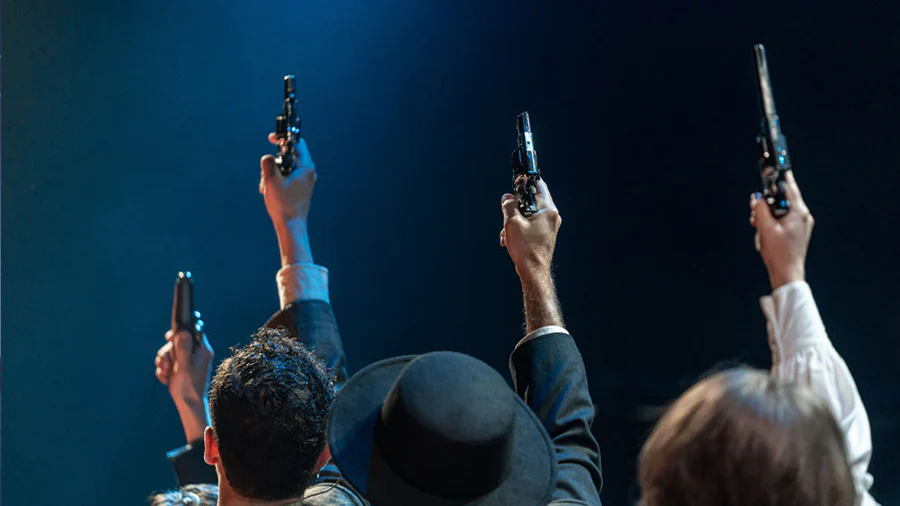
by Chris Peterson
There’s a moment in almost every rehearsal process when someone says it casually, usually while flipping through the script or scanning a scene list: “Oh, there’s a gun in this scene.”
And just as casually, someone else replies, “We’ll figure it out.”
That phrase is practically a mission statement for community theatre. We figure things out all the time. We borrow costumes from basements and attics. We build sets out of donated lumber and whatever hardware happens to be on sale. We learn choreography, dialects, and quick changes on the fly because there isn’t always a specialist in the room.
That ingenuity is part of the magic. It’s how stories come to life in gyms, church halls, and black boxes that shouldn’t technically be able to pull them off—and somehow do.
But there are moments when “we’ll figure it out” stops being charming and starts being dangerous. Prop firearms are one of those moments.
Because prop guns aren’t just props.
They’re not like tables or letters or briefcases or fake food. They carry cultural weight, emotional weight, and very real physical risk. Even when they aren’t capable of firing a projectile. Even when they’re only used for sound. Even when everyone involved is kind, careful, and well-meaning. Even when “we’ve done this show before.”
That’s the uncomfortable truth: intention does not equal safety.
I’ve been in a show(All My Sons) where the gun never even appeared onstage. The audience never saw it. It was fired offstage purely as a sound effect, timed precisely to a cue, and never handled by an actor. And still—still—we didn’t treat it casually.
Before we ever reached tech, there was specific training given by a specialist who had certifications. Only one designated crew member was allowed to handle the firearm. No one else touched it. Ever. There were clear protocols about where it lived, when it moved, how it was handled, and who had authority over it. There was no improvising, no swapping responsibilities, no “just this once.” If something felt off, rehearsal stopped.
That level of care wasn’t overkill. It wasn’t paranoia. It was professionalism. And again, that was for a gun the audience never saw.
Most community theatre companies aren’t reckless. They’re run by people who care deeply about their casts, their crews, and their audiences. They want everyone to feel safe. But caring doesn’t replace training. Familiarity doesn’t replace certification. And confidence doesn’t replace clear, enforceable protocol.
There’s a persistent myth in theatre that if something is labeled “fake,” it’s automatically harmless. Blank-firing guns. Starter pistols. Replica firearms. Decommissioned weapons. All of these sound safe on paper. None of them are safe by default.
Even a firearm that never fires a bullet can seriously injure or kill someone through debris, pressure, misfires, or simple mishandling. Even a gun that’s been used “a hundred times before” can become dangerous the moment assumptions replace procedures. Even a gun that’s “never pointed at anyone” becomes a risk when people get tired, distracted, or rushed—which, if you’ve ever lived through tech week, you know happens to even the most conscientious teams.
If a production cannot safely handle a prop firearm with trained professionals, then the question shouldn’t be how to make it work anyway. The question should be whether the firearm is necessary at all.
Often, it isn’t.
Directors and designers have been solving this problem creatively for years through sound design, lighting cues, blocking, offstage action, and stylized staging. Audiences are more imaginative than we sometimes give them credit for. They don’t need hyper-realism to understand a moment. They need clarity and intention.
What concerns me most isn’t malice. It’s casualness. It’s the assumption that because nothing bad has happened before, nothing bad ever will. It’s the idea that asking for outside expertise somehow means you’re overreacting or failing as a leader. It’s the quiet pressure not to be “the difficult one” in the room.
But asking for professional help isn’t a failure. It’s leadership.
It says you understand your limits. It says you respect the people who have volunteered their time and bodies to the process. It says you’re willing to slow down if slowing down keeps someone safe.
Community theatre asks a lot of its artists. Long hours. Physical strain. Emotional vulnerability. Little or no pay. Deep personal investment. The least we can do is ensure no one is put in physical danger because a production chose convenience, tradition, or aesthetics over care.
So if your show includes a firearm of any kind—blank-firing, non-firing, replica, visible or offstage—pause. Pause before you rehearse it. Pause before you block it. Pause before you hand it to someone and say, “Just don’t point it at anyone.”
Reach beyond your own instincts and your own experience. Bring in trained professionals. Give one person clear responsibility. Establish protocols that aren’t optional. And if that expertise isn’t accessible, be brave enough to rethink the choice entirely.
This isn’t about fear. It’s about care. Care for your actors. Care for your crew. Care for the trust people place in you when they walk into a rehearsal room.
Community theatre is strongest when it knows both what it can do—and what it shouldn’t do alone.
Because no show, no moment, no effect is worth someone getting hurt.