by Chris Peterson
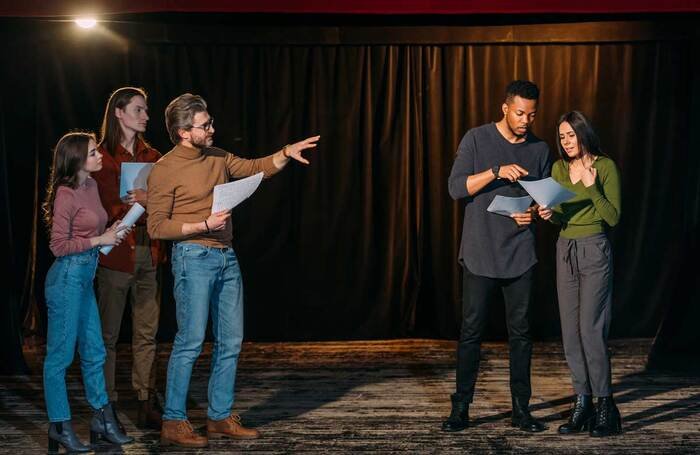
Directors, how exactly are you actually blocking a scene?
Don’t give me the ideal answer, or the textbook answer, and definitely not the answer you would give in a theatre education panel. I mean the real answer.
Because I have become increasingly fascinated by how wildly different blocking processes can be from one room to the next, and how rarely we actually talk about them honestly.
Some directors walk into rehearsal with every cross, turn, sit, and pause already mapped out in their heads. Some build it in the room with the actors. Some do a little of both. Some block based on story. Some block based on what feels emotionally honest. Some, if we are being real, block based on not wanting people to stand there like furniture.
And actors have opinions about all of it.
Some actors love precise blocking. They want to know exactly where to go, when to move, what motivates it, and how it fits into the overall stage picture. That kind of structure can feel safe. It can free them up to focus on the emotional life of the scene because the physical life has already been worked out.
Other actors hate getting locked in too quickly. They want space to explore. They want blocking to come out of instinct instead of being handed to them like traffic directions.
And both sides make sense.
Good blocking is one of those things audiences may never consciously notice, but they feel it when it is bad. They feel when two people are moving just because someone thought the stage picture needed variety. They feel when actors are crossing for no reason. They also feel when a scene has no shape at all and just sort of sits there.
That is why I think this is worth talking about more openly.
Directors, when you block a scene, where are you actually starting? Character first? Pace? Sightlines? Do you hear the rhythm of a scene and build movement from it? Do you prefer to come in prepared or discover it in rehearsal? How much input do you want from actors before it starts to feel less like collaboration and more like chaos?
And actors, what helps you most? Do you like firm choices early so you can build on them? Do you appreciate being told the why behind a movement, or do you mostly just want to know where you need to be and trust the rest will come?
There is no one correct way to do this; however, I do think there are ways that create trust in a room and ways that shut people down.
The best blocking, at least to me, never looks like blocking. It looks inevitable. It looks like the scene could not have happened any other way. But getting to that point can happen through a hundred different methods, and I would love for more directors and actors to talk honestly about what actually works for them.
So I’m curious; directors, how do you really block a scene? And actors, how do you like blocking to be handled?
Because this feels like one of those parts of the process we all experience, all judge, all remember, and somehow still do not discuss enough.