Theatre Apologizes for the Phrase “From the River to the Sea” in Actor’s Come From Away Bio
by Chris Peterson
An Atlanta-based company has issued a public apology after language considered by many to be antisemitic appeared in an actor's biography in the playbill for its current production of Come From Away.
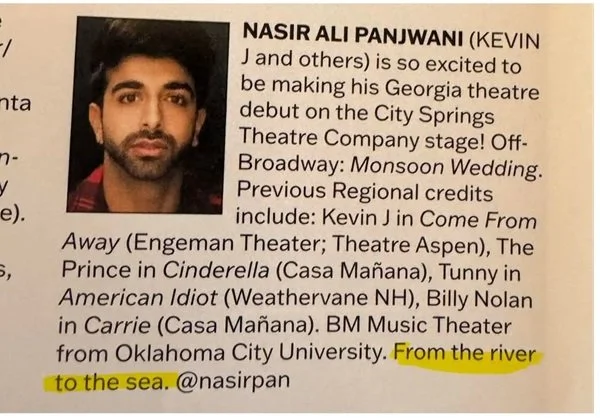
The phrase in question was “From the River to the Sea,” a slogan that has become deeply controversial and that many in the Jewish community consider antisemitic.
In a statement released by City Springs Theatre Company said it “exists to bring people together through the power of live theatre” and apologized for language included in one actor’s biography that “upset and concerned members of our community.” The company said the actor has apologized and recognizes the need to remove the statement. It also acknowledged that the language is interpreted as deeply hurtful to members of the Jewish community.
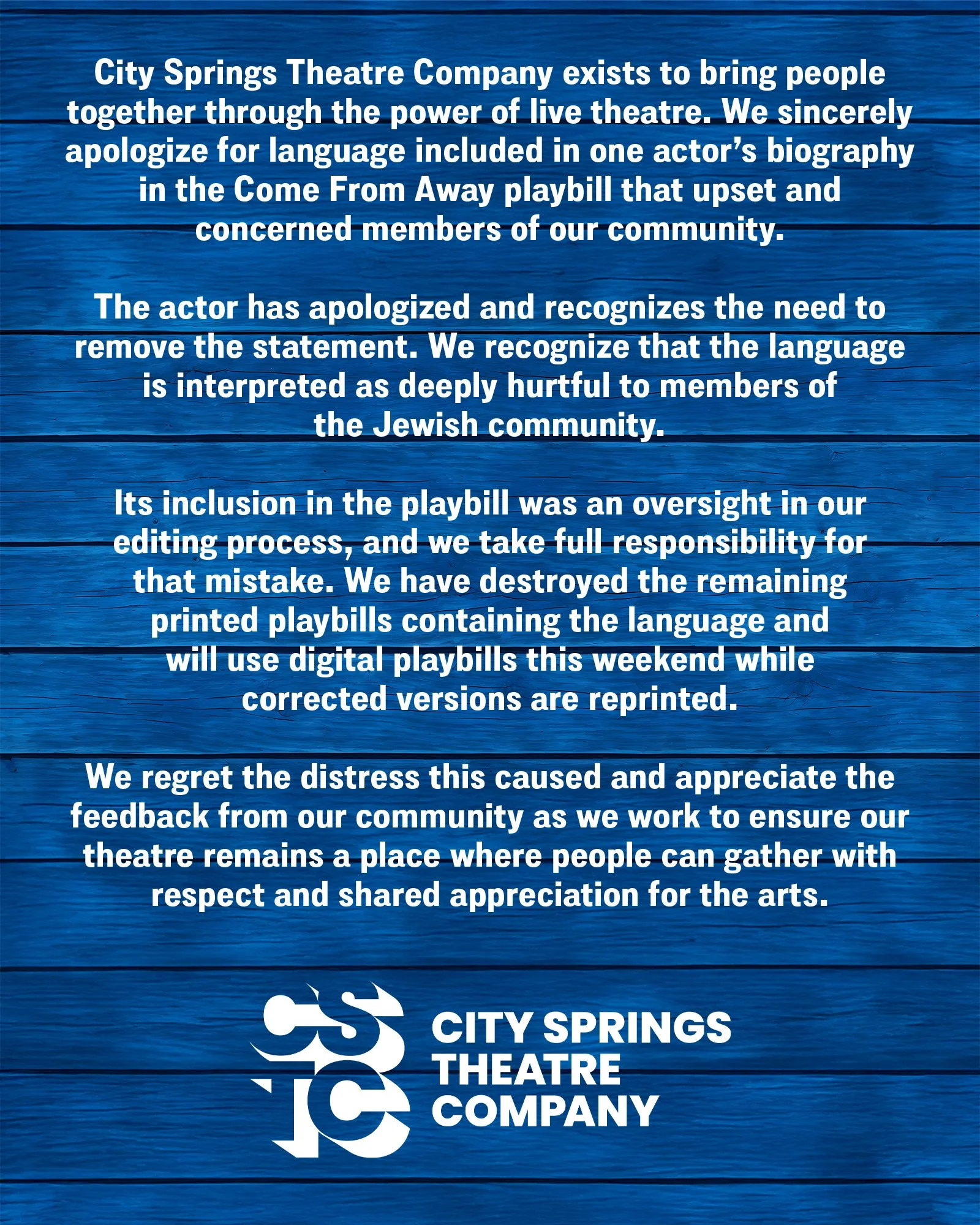
City Springs further said the phrase’s inclusion in the printed playbill was “an oversight” in its editing process and that the company is taking full responsibility for the mistake. According to the statement, the remaining printed playbills containing the language have been destroyed, and digital playbills will be used while corrected versions are reprinted.
The actor involved is Nasir Panjwani, who appears in Come From Away as Kevin and in other roles, including Ali. A photo of his bio before it was edited was posted on social media.
According to reports from those connected to the show, Panjwani, who is Pakistani, has not made any hateful or antisemitic comments during his time with the production.
Here’s my take on this, and I’m going to be careful here. I’m not Jewish, nor am I Palestinian.
Yes, the theatre absolutely needed to respond. It had to. You cannot produce Come From Away, a musical so rooted in compassion, empathy, and the idea of people coming together across fear and grief, and then have language in your playbill that many Jewish patrons would understandably find deeply offensive. That contradiction is just too glaring to ignore.
So, I give credit where it is due: City Springs issued a statement. They did not pretend people were overreacting. They acknowledged that members of the community were hurt, accepted responsibility, and took action to remove the language and correct the materials. That is what they should have done.
It's also important to note that the phrase “From the River to the Sea,” and part of why this blew up the way it did, is not one of those phrases people hear in remotely the same way.
For many Jewish people, it is not complicated. To them, it is offensive. According to the Anti-Defamation League (ADL), It is antisemitic. The complete phrase is “From the river to the sea, Palestine will be free”. It is heard as a call for the elimination of Israel altogether. So, when members of the Jewish community say they were hurt by seeing it in a theatre playbill, that reaction should not be waved away. They are responding to language that, for them, carries a very real history of hostility and fear.
At the same time, I understand that there are those who use that same phrase as a call for Palestinian freedom, dignity, and liberation, not hatred. They do not see it as antisemitic. They see it as political speech, full stop.
And that right there is exactly the problem.
Look, I do not want to be in the business of policing people’s playbill bios. Usually, they are harmless. A few credits, a thank you, maybe something sweet or funny, and everyone moves on with their lives.
But maybe this is a good reminder that political statements, especially on deeply divisive issues, are probably best left out. Keep it to the roles, the gratitude, and the basics. A playbill bio is not a debate stage, and it is definitely not the place for language that distracts from the actual production.
It is also worth saying plainly that nobody should be sending hate to the actor over this. Criticizing the inclusion of the phrase is fair. Harassment is not. Online mob behavior does not make anyone safer, wiser, or more compassionate. It just turns a legitimate concern into another excuse for people to be awful to each other.
At the end of the day, this is not really that complicated. The phrase should not have been in the bio. The theatre was right to remove it. Jewish patrons had every right to be upset by it. It would seem that the actor did not mean it in a hateful way. All of that can be true at once. Maybe the real takeaway here is: keep playbill bios simple. Keep theatres thoughtful. And keep the response to situations like this grounded in accountability, not cruelty.