by Chris Peterson
Congratulations are apparently in order for Gillian Banks Creative Productions in South Yorkshire, which seems to have achieved what no theatre company should ever aspire to accomplish: producing Dreamgirls with hardly any Black people in it.
Bold. Brave. Historic, even.
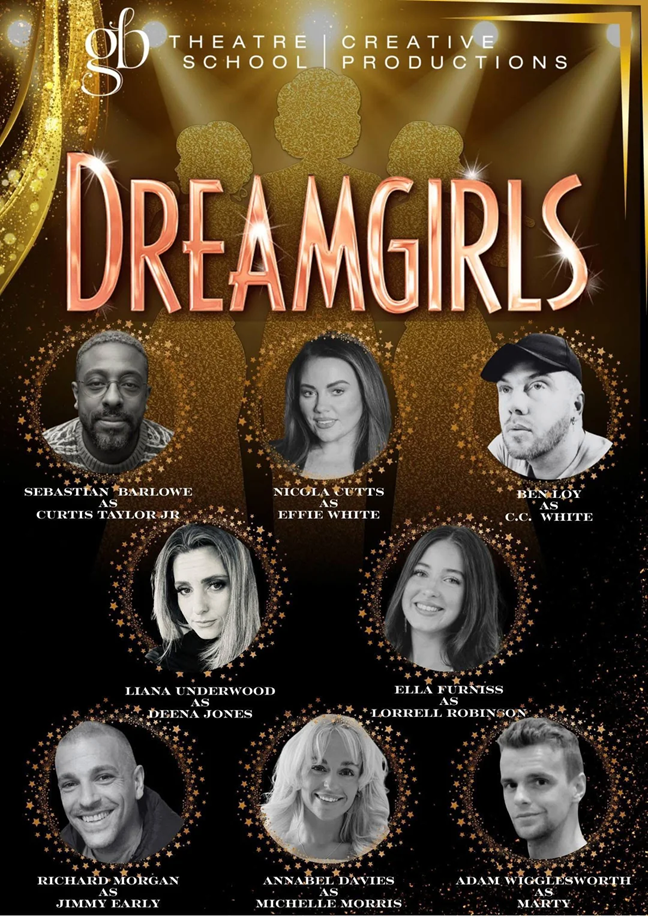
At long last, someone looked at one of the most iconic Black musicals in the American theatre canon, a show rooted in Motown, the rise of Black female artists, the exploitation of Black performers, and thought, “You know what this needs? A mostly white principal cast.” Here is an image of their cast announcement for their production set for a June opening.
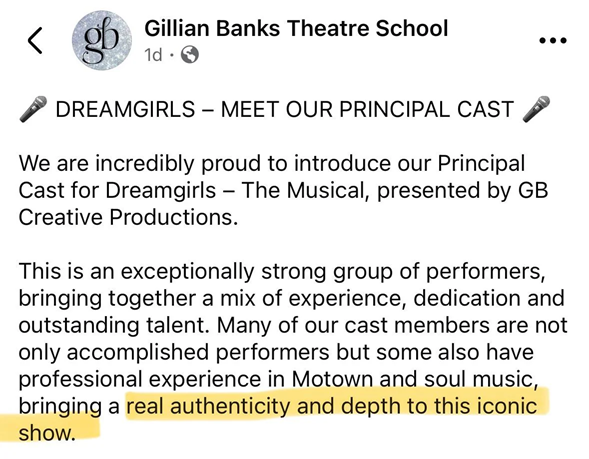
And not only that, but according to the company’s own since-deleted Facebook announcement, they are “bringing real authenticity and depth to the show.”
Well, thank goodness.
Because when I think of Dreamgirls, I think of Effie White, Deena Jones, Lorrell Robinson, Jimmy Early, C.C. White, and a world built around Black ambition, Black sound, and Black survival.
Apparently, Gillian Banks Creative Productions thought of something else entirely.
Of course, social media has become aware, and the company may have realized that this was not the triumph of authenticity they thought it was. Since criticism began circulating, Gillian Banks Creative Productions appears to have been deleting posts from its social media, including materials related to this production, which is always the clearest sign of total confidence in your artistic choices.
Now, before someone races to the comments with, “Well, technically, the licensing doesn’t say the roles must be played by Black performers,” let me stop you right there. That looks to be true. But this is one of those moments where legality and intelligence are not the same thing. Just because you can do something does not mean you should. And if your entire defense of a casting decision is “the contract didn’t explicitly stop us,” that is not a defense. That is an admission that common sense left the building somewhere around callbacks.
Dreamgirls is not just a show with big songs. The musical follows a young Black female singing trio and draws heavily from the world of 1960s and 1970s Black R&B acts, especially the cultural orbit of Motown and The Supremes. Its story is inseparable from race, image politics, what Black artists had to sacrifice to become palatable to white audiences, and the specific pressures placed on Black women in entertainment.
And for anyone trying to pretend this is just fan interpretation, it isn’t. Dreamgirls does not merely “feel” like a Black musical because of its original cast or because Jennifer Holliday blew the roof off Broadway. The story itself is about a young Black girl group trying to break through an industry that wants their sound, their talent, and their image reshaped for white audiences. There are moments in the show and its adaptations that deal directly with Black music being dismissed, repackaged, or pushed toward white audiences.
So, when a theatre company casts nearly all of its principal roles with white performers, the issue is not simply “representation”; it is comprehension.
Because what exactly are these actors being asked to embody? What history are they carrying? What cultural context are they stepping into? What does it mean for white performers to play Black artists whose story is partly about Black music being repackaged, softened, and sold to white America?
That is not a small detail. That is the show.
And we have seen this sort of nonsense before. A few years ago, there was similar controversy in Ireland around a production of Hairspray being staged with all-white cast.
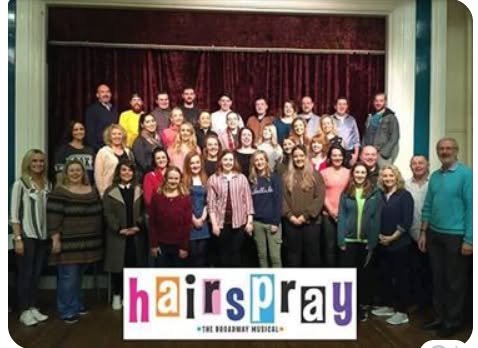
Eventually, Marc Shaiman and Scott Wittman, along with Music Theatre International, addressed the loophole and made it clear that future productions needed to cast the show to reflect the characters as written. Shaiman even acknowledged that the situation had troubled them for years and that they had previously relied too much on theatres doing the right thing.
Apparently, common sense still needs a stronger agent.
Because no one should have to write “please do not remove the Black people from this Black musical” in bold letters across a licensing agreement for adults in theatre to understand the assignment.
No one is saying performers in South Yorkshire do not care about theatre. But caring about theatre should include caring about the people, cultures, and histories these shows come from. It should include knowing when a show is not yours to do, at least not right now, not with this cast, and not in this way.
Because Dreamgirls deserves more than good intentions and a Facebook caption. It deserves a company that understands what it is actually producing. It deserves performers who can carry not just the notes, but the history underneath them.
And if a theatre group cannot provide that, then maybe they should leave Dreamgirls alone until they can.