Theatre Professor and State Rep. Amy Roeder Makes Case for More Artists in Politics
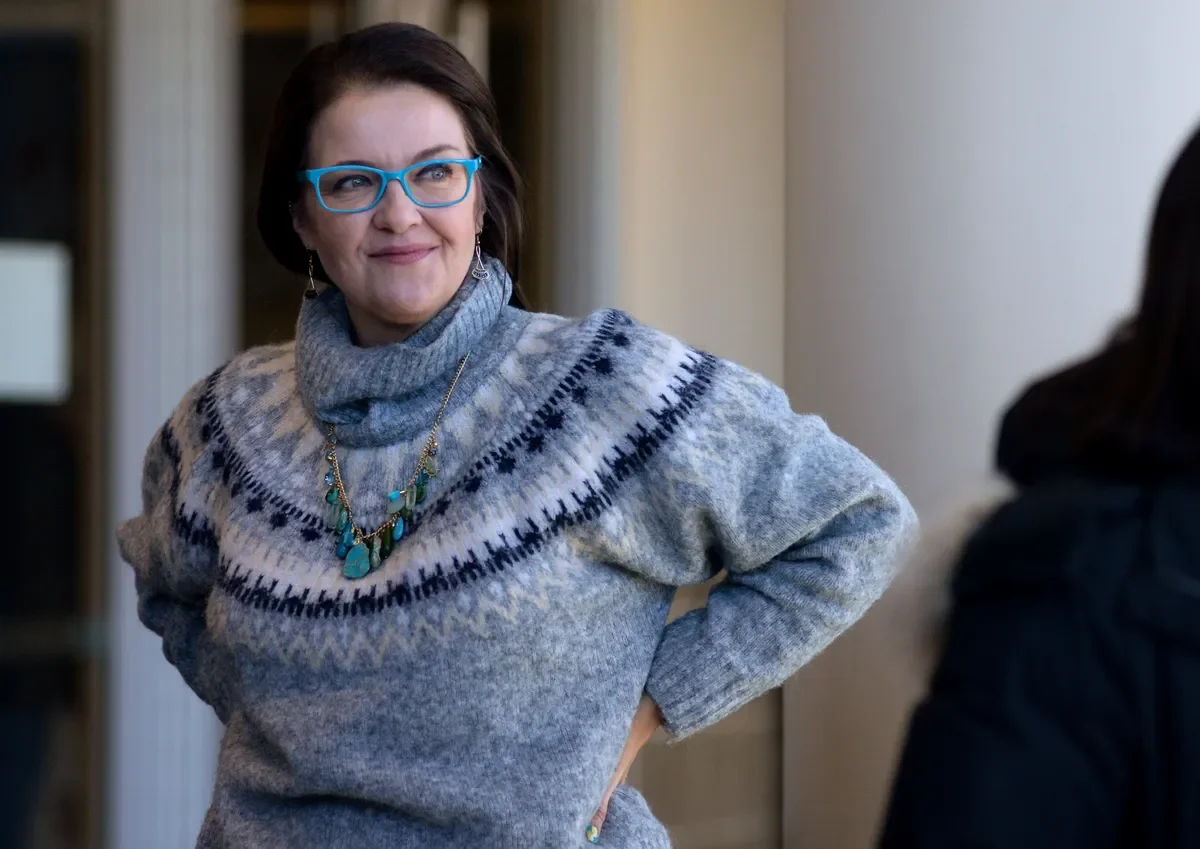
Amy Roeder
by Chris Peterson
Editor’s note: This article was not paid for, sponsored, or authorized by any political campaign, committee, or outside organization. It is an independent editorial piece.
When I first read about Maine State Rep. and theatre professor Amy Roeder, running for higher office, I wasn’t really surprised. I was more like, “ Of course, a theatre person would make sense in politics.”
I decided to reach out to her to get her perspective of theatre people in politics, and, after hearing what she had to say about that, my feelings only grew stronger.
In addition to serving as a representative for the Bangor area of Maine, Roeder is an adjunct theatre professor at the University of Maine. Earlier this year, she launched her campaign for Maine State Senate District 9, which covers the Bangor and Hermon areas.
Something readers may not know about me is I was at one point also interested to go into politics. I was curious to see whether my reasoning for running for office matched Roeder’s. Not surprisingly, it did.
“I’ve always been taught that the best acting comes from being totally in the moment and exercising great empathy for the character you’re playing,” Roeder told me, “Even if you’re the villain, it’s your responsibility to understand why that character acts the way they do. That stretches your understanding of the human condition and actively asks you to see things from different perspectives. Living in hyper partisan times, it’s an incredibly helpful skill to be able to try and see the issue from many perspectives.”
Given that I don’t know many theatre people who have successfully run for public office, I asked Roeder whether theatre people could bring something to public office that often goes overlooked.
“Every theatre person I’ve met is deeply curious about the world. Why does this problem exist? How have people tried to solve it in the past? Does my bill match this moment, or am I trying the wrong solution for my state/county/municipality?’ she said.
“When we analyze scripts, we ask important questions about how each character’s arc touches the others’ and what each moment, each choice does to affect the story. It translates well to looking for potential unintended consequences of bills.”
I also asked whether working with students influences the types of legislation she wants to see passed.
“In Maine, we keep having conversations about bringing young people to the state or keeping our own young people from leaving. Getting to teach at a university makes me actively aware of the issues facing the very young people we want and need in our state. I got to know the graduate student workers who were working to form a grad worker’s union on campus and that was an incredible window into the practical concerns of students from housing availability to healthcare to childcare to fair wages.”
I then asked if working in politics has affected the way she instructs or interacts with students.
“I am very, very mindful of the fact that there are likely students in my classes that don’t share my political leanings. I want every student to feel welcome in my classes, even when I teach asynchronously online. Because I feel that the best policy comes from considering many different perspectives, I tend to select written work from artists of many different demographics.”
Finally, I asked Roeder whether more theatre people should consider running for office.
“I think EVERYBODY should be more involved in politics, to be frank,” she said. “If arts professionals leave the advocacy to other people, though, our voices don’t get heard and the arts are suddenly not a priority.”
She continued. “In my own municipality, a study many years ago showed that the arts contributed $12 million to the local economy. Every one dollar spent at our local professional theatre generated $3 of economic impact in our community. Being on the Labor Committee, I also like to remind people that careers in the arts deserve the same respect as careers in other fields and we all deserve fair wages, safe workspaces and dignity on the job. Can you tell I’m a fan of unions? Proud AEA member since 2008, SAG-AFTRA since 2003.”
Roeder is right; more theatre people should be involved in politics.. Not because they are magically better than everyone else, but because the skills are already there. Empathy. Listening. Collaboration. Communication. Curiosity is important, as well as the ability to sit with contradiction and still try to understand the person across from you.
We spend so much time defending the value of theatre as if it only matters inside rehearsal rooms or on stages. But this is a reminder that theatre trains people for the real world too, and maybe especially for politics. If more theatre artists, educators, and advocates stepped into civic life, we would get better conversations, better leadership, and even more humanity in the process. At the very least, we might get fewer bad speeches and a lot more people who actually know how to listen.
For more information about Amy Roeder, visit https://www.maine.gov/housedems/roedera