Not Every New Broadway Musical Needs to Be Based on Movies. But at These Prices, What Else Is Filling the Seats?
by Chris Peterson
Every season, we end up back in the same conversation: Broadway is too obsessed with pre-existing IP.
Too many musicals are based on movies, television, celebrity catalogs, documentaries, or other material that already comes with a built-in Wikipedia page and a marketing department breathing easier.
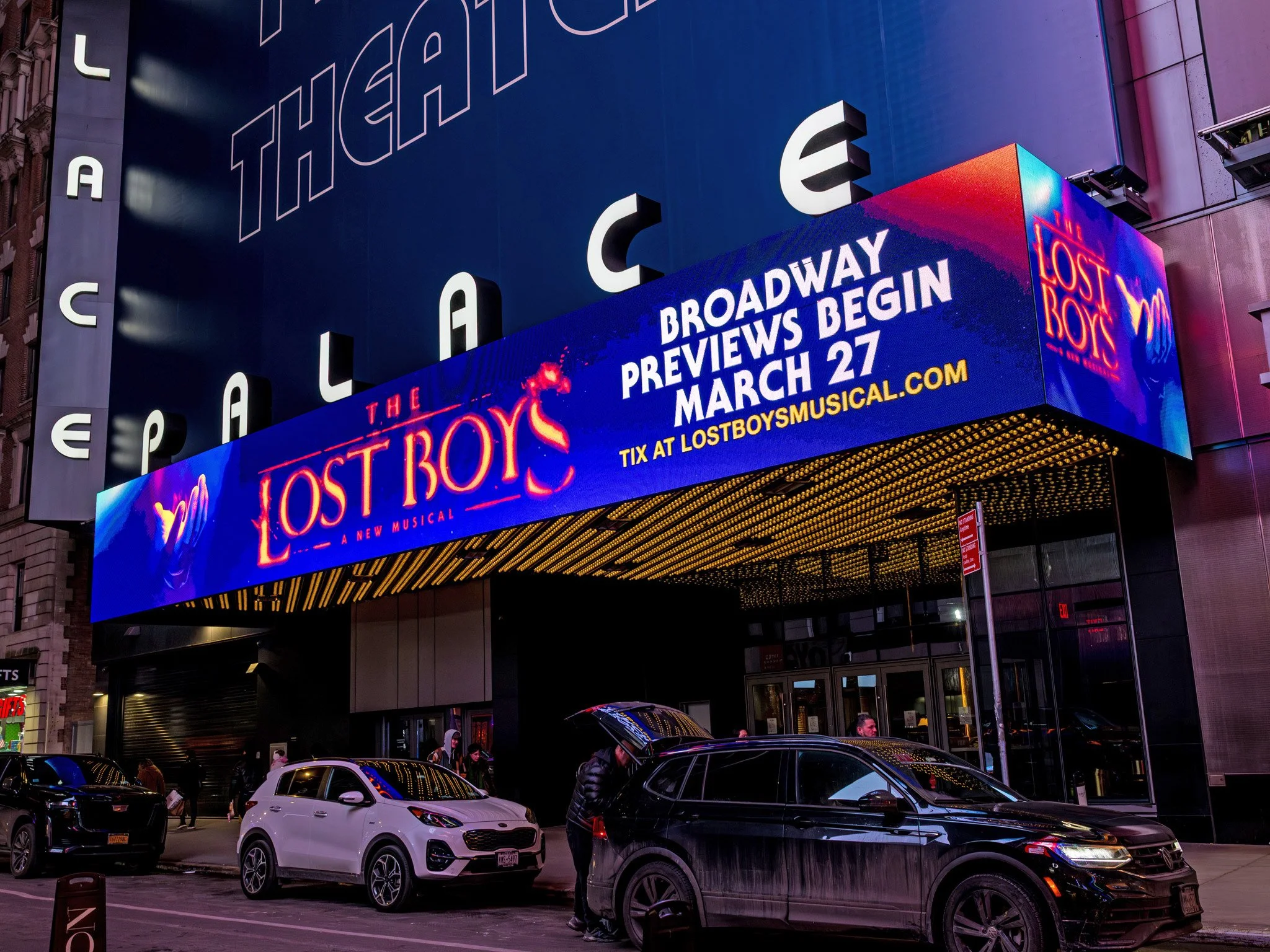
The new musicals of 2025-26 include movie and television adaptations such as The Lost Boys, Beaches, Titaníque, and Schmigadoon!
And listen, I get the frustration. On a creative level, it can feel a little bleak. Musical theatre is supposed to be a place for new stories. It should not constantly feel like the first question in the room is, “What intellectual property do we already own that can tap dance?”
But I also think people flatten this conversation in a way that misses the bigger point.
Because I do not think Broadway audiences are dumb. I do not think audiences are sitting there confused and frightened unless they can point to a poster and say, “Oh good, I know this one.”
Tony history does not support that argument anyway. Since 2010, only four Best Musical winners have been adapted from movies: Once, Kinky Boots, The Band’s Visit, and Moulin Rouge! The Musical.
So, despite the hand-wringing, it is not like the Tonys have turned into the Kid’s Choice Awards for recycled content.
What that tells me is not that audiences only want adaptations. It tells me something much simpler, and much less flattering to the business side of Broadway.
Originality starts to look riskier when the ticket costs are ridiculous.
The Broadway League reported that the 2024–2025 season grossed a record $1.89 billion, and for the week ending March 29, 2026, the average paid admission on Broadway was $131.33. That is not “let’s take a chance on something quirky” money. That is, “we are choosing one show, and I would like not to feel scammed” money.
So yes, Broadway keeps leaning on familiarity.
And really, can you blame them?
If you are a tourist in New York for one weekend, and you are picking one show, are you more likely to drop serious money on a completely original title you know nothing about, or on something with at least a little built-in familiarity? That is just how people spend money when the stakes are high.
The current landscape gives people plenty to complain about, to be fair. But it is also important not to overstate the case and act like Broadway has become a graveyard for original ideas, because it has not. Two Strangers (Carry a Cake Across New York) is original. The issue is not that originality no longer exists. The issue is that it has to work harder to get to Broadway and convince people to buy in.
That is a very different problem.
Because artistically, no, I do not want Broadway to become a place where every new musical has to begin life as a movie, a television series, a pop album, or some dusty piece of content a producer found lying around and decided to slap an intermission on. That sounds exhausting.
But Broadway in 2026 is not exactly operating like a business built to reward trust. It is operating like a business that wants insurance.
That is why the discourse around this can get a little too smug. People love to say Broadway should take more risks. Sure. I agree. But who exactly is supposed to absorb those risks? Producers? Investors? Tourists trying to pick one show for spring break?
You cannot keep raising prices and then act shocked when audiences gravitate toward what feels familiar.
Until Broadway figures out how to make original stories feel less like a gamble at these prices, producers are going to keep chasing familiarity, and audiences are going to keep getting blamed for a problem the business itself helped create.
Because at the end of the day, when seats cost this much, the question is not whether audiences are capable of embracing something new. It is whether Broadway has made “new” feel worth the risk.