Arizona Theatre’s World Premiere Musical Raises Questions Over AI-Generated Accompaniment
by Chris Peterson
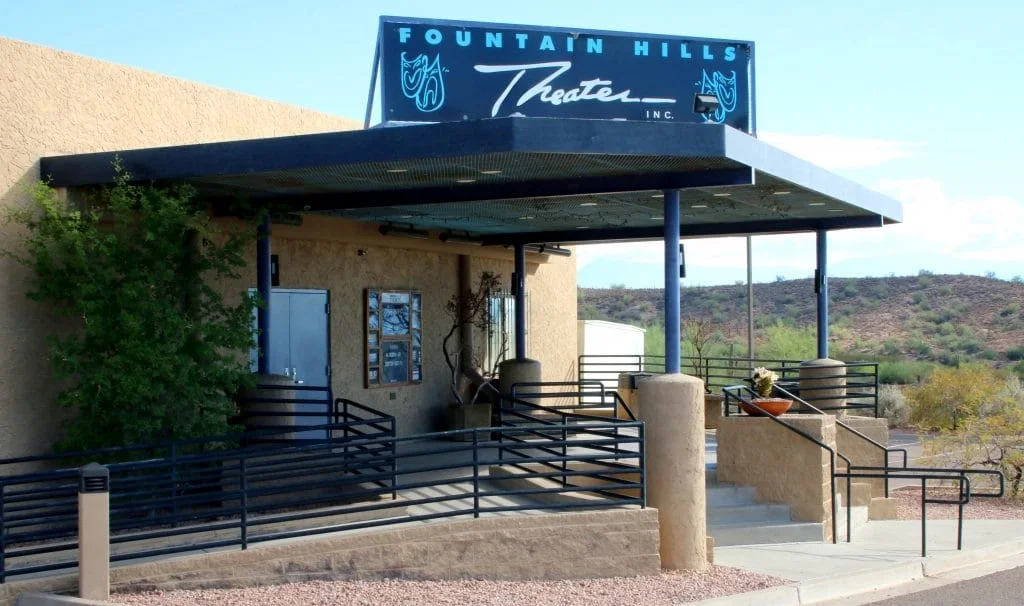
Fountain Hills Theater in Arizona is opening a world premiere musical on May 15, called Shrew!, a country-western adaptation of Shakespeare’s The Taming of the Shrew.
According to reporting from The Fountain Hills Times, the script and lyrics were written by Peter J. Hill, with arrangements by Michelle Lavin, “in addition to AI-generated accompaniments.”
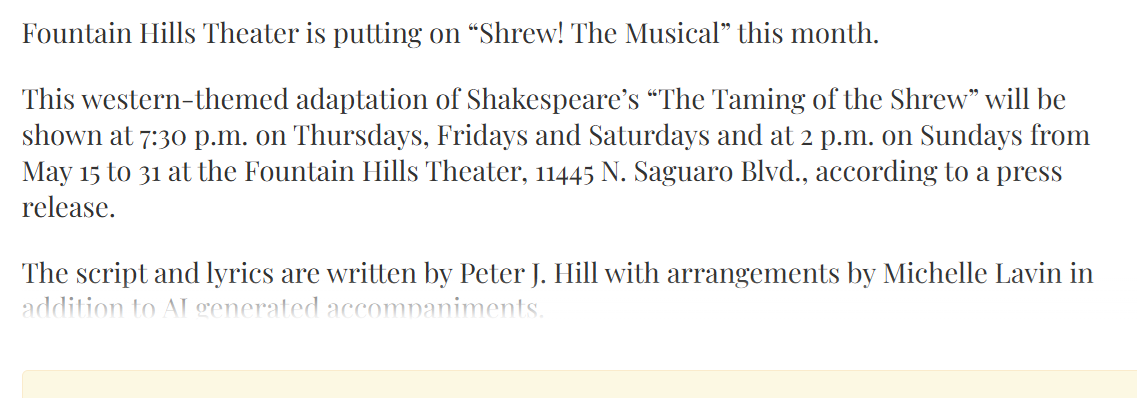
Image from Fountain Hills Times (partially cut off due to paywall)
While it was mentioned in this press release earlier, the theatre’s latest advertising does not seem to lead with that detail, which I do think matters.
If AI-generated material is part of a production, especially a world premiere, audiences should know that; it should be disclosed in every advertisement. But for me, the larger issue is the choice itself.
Because once AI is used to create the score or accompaniment for an original musical, we are no longer talking about AI helping someone organize rehearsal schedules or clean up a press release. We are talking about AI being used within the piece's actual creative bloodstream.
And I think that is wrong.
Musical theatre is not just a script with songs thrown in. The accompaniment matters. The vamp before a verse, the shift in texture under a joke, the emotional color of a chord progression, all of that is part of the storytelling. That work should belong to artists.
It belongs to composers, arrangers, orchestrators, music directors, accompanists, and musicians who spend years learning how to make a song serve a scene. It belongs to people who understand not only music, but theatre. And yes, those people cost money, because art is labor.
That is the most uncomfortable part of this AI conversation . AI is often sold to the arts as a tool of possibility, but in practice, it too often becomes a tool of replacement, and probably in this case, to save money. It usually removes a human being from the process and then asks everyone else to applaud the efficiency.
And community theatre should be especially careful here.

When a theatre presents a world premiere, there is an implied promise that we are seeing artists take a swing at something new. Maybe it works. Maybe it does not. That is part of the thrill. But the value is in the human attempt: the messy, risky, vulnerable act of making something original and putting it in front of an audience.
AI-generated accompaniment muddies that promise. It asks us to accept machine-made material as part of a human-made theatrical work, and I am not comfortable with that. Not because I am afraid of technology, but because I care about who gets to make art, who gets credited for it, and who gets quietly pushed aside when “innovation” becomes a nicer way to cut people out.
There is also a slightly odd theatre-history wrinkle here. Musical theatre already has a pretty famous Taming of the Shrew-inspired show in Kiss Me, Kate.
To be clear, Shrew! does not appear to be based on Kiss Me, Kate in any way, and Shakespeare is public domain, so there is nothing wrong with creating a new adaptation. But if a theatre wants to stage a musical version of Taming of the Shrew, the obvious licensed option already exists. Going the world-premiere route instead puts even more weight on the word “original,” which is why the AI-generated accompaniment detail matters so much.
So yes, I think theatres should disclose when AI is used. But more importantly, theatres should ask whether it belongs there in the first place. In the case of original musical theatre, especially when it comes to the music itself, my answer is no.
OnStage Blog has reached out to leadership at Fountain Hills Theater for comment. We will update this piece with additional information as it becomes available.