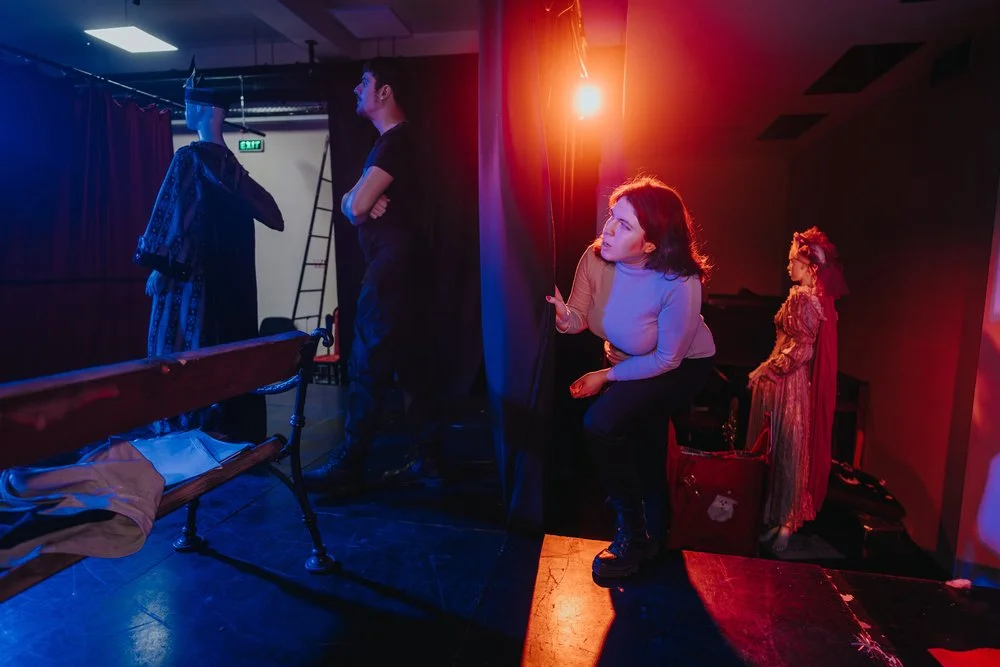
by Chris Peterson
One of my favorite things about dress rehearsal is watching the moment when a production suddenly feels bigger than the actors.
Up until then, rehearsal can feel very centered on what is happening onstage. Lines, blocking, music, choreography, notes. Then you get into dress rehearsal and all of a sudden the rest of the machine shows up.
A prop is exactly where it needs to be. A costume change that seemed impossible somehow happens. The lights shift, the sound cue lands, the furniture moves and the scene keeps going. That is usually when actors start realizing just how many people have been quietly building the show around them.
I have seen this in college theatre and community theatre, and it never really changes.
There is always someone backstage fixing something nobody else noticed was broken. Someone is pinning a costume, moving a couch, resetting props or figuring out how to solve a problem with about thirty seconds to spare. In community theatre especially, a lot of those people may have come straight from work and barely had time to eat before spending the next three hours running around backstage.
Most audiences will never know what they did.
That is part of the strange thing about crew work. When it is done well, you are not supposed to notice it. The chair is there. The door opens. The costume is ready. The scene change happens and the audience keeps watching the story.
Dress rehearsal is also usually where everyone discovers exactly how complicated the show really is. Someone cannot find a shoe. A prop that has been sitting in the same place for three weeks suddenly disappears. An actor asks a question about a costume change that probably should have been asked much earlier. Meanwhile, the stage manager is somehow keeping track of all of it.
It can be stressful, but it is also when the production finally starts feeling like a production.
Theatre is incredibly handmade. Every little moment the audience sees depends on somebody doing something at exactly the right time, often in the dark and without any recognition for it.
Actors may be the people the audience comes to see, but they are never doing it alone.
Dress rehearsal is usually when that becomes impossible to miss.