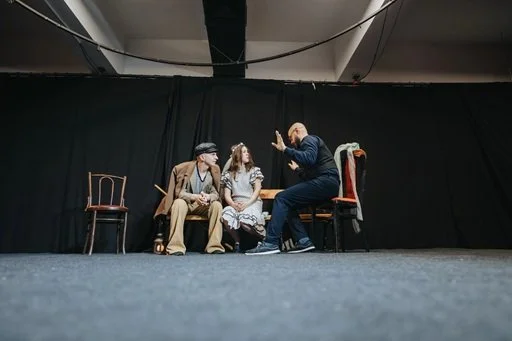
by Chris Peterson
One of the more frustrating things that can happen in a rehearsal room is watching an actor turn a director’s note into a negotiation.
You give the note. They explain why they made the choice. You explain the note again. They defend the choice again. Suddenly, everyone else is sitting there watching a five-minute debate that probably should have taken thirty seconds.
Don’t do that.
But I also don’t believe actors should just nod their heads at every note, no matter what, because directors can be wrong. I know I have been.
Years ago, I was directing a show and gave an actress a note about a moment in one of her scenes. I wanted her to play the beat differently. I thought the choice she was making was taking some of the tension out of the scene, and I gave her a fairly specific adjustment.
She took the note. No argument. No eye roll. No “But my character would never...” in front of the rest of the cast. We moved on.
Later, when rehearsal was over, she came up to me privately and asked if we could talk about that moment.
And this is where she handled it exactly right.
She didn't come over looking to prove that I was an idiot. She explained what she was trying to do and, more importantly, why. There was something earlier in the scene that she was connecting to that I hadn't considered. She walked me through the character's thought process and how changing that particular moment would affect something that happened a little later.
I listened. Then I went back through the scene in my head. And she was right. Completely right. I told her to keep what she had been doing.
I actually respected her more afterward because she had done something actors sometimes seem afraid to do: she challenged a director without challenging the director's authority over the room.
There is a difference.
When a director gives you a note during rehearsal, your first instinct shouldn't be to explain yourself. We probably already saw what you were trying to do. That's why we're giving the note.
Take it. Write it down. Try it.
Sometimes you'll discover that the note fixes something you didn't realize wasn't working. And sometimes you're still going to think the note is wrong.
Fine. Find an appropriate moment and talk to the director privately.
Ask a question. Explain what you're feeling. Talk about what you're trying to accomplish in the scene. A good director should be willing to have that conversation.
What actors need to understand, though, is that rehearsal isn't a courtroom and you don't need to win your case every time somebody gives you an adjustment.
Nothing kills momentum faster than an actor stopping rehearsal after every note to explain why they did what they did.
I've also seen actors disguise arguing as questions.
“So you really think she would do that?”
That's not always a question. Sometimes we know exactly what that is.
There are also directors who need to get better at receiving pushback. If an actor respectfully questioning one of your choices makes you feel threatened, that's worth examining.
The best rehearsal rooms I've been in have never been dictatorships. They're conversations. But they are conversations with a structure. That's how this is supposed to work.
So actors, take the note. Try the note. And if something still feels wrong, have the conversation. Just know when to have it.
Because sometimes the director is seeing something you aren't. And every once in a while, you're seeing something the director missed.