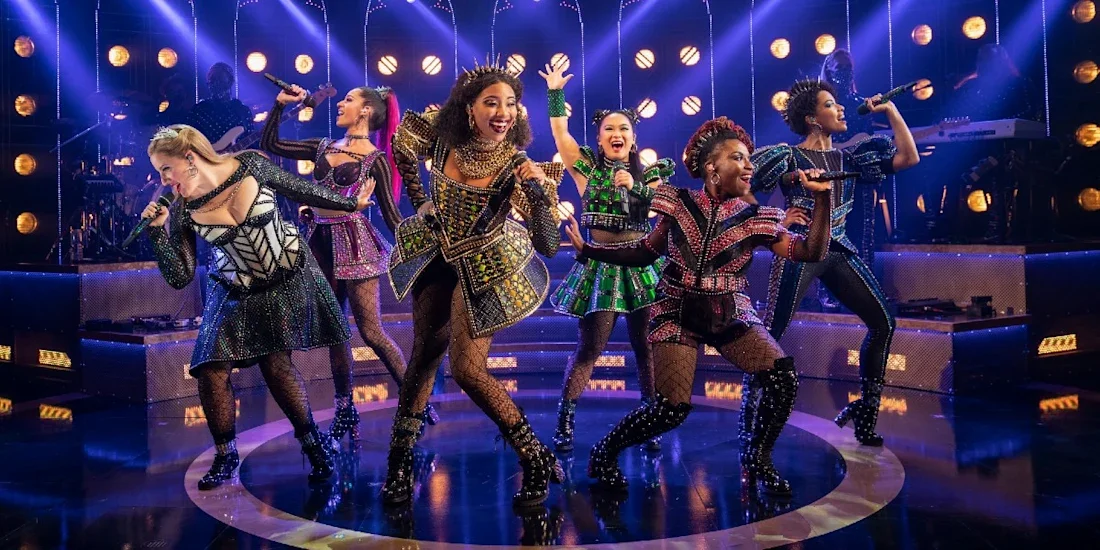
(Photo: Six on Broadway Joan Marcus)
by Chris Peterson
Kevin Lynch has now been publicly associated with two legal challenges involving theatre equity efforts. First, a lawsuit over a BIPOC Night ticket discount at Playwrights Horizons. Now, a lawsuit over a Wicked professional opportunity connected to Maestra and MUSE.
So naturally, one has to wonder where this deeply dramatic journey could go next.
To be clear, this is satire.
But if one were to imagine a world where every theatre-related effort that does not include him could be imagined as a potential courtroom drama, here are five other theatre entities that may want to start reviewing their liability insurance.
“Six: The Musical”
A musical about six women reclaiming their stories? Six women? Not five women and Kevin Lynch?
The production may argue that the show is historically based on Henry VIII’s wives, who were, famously, women. But that kind of rigid eligibility requirement may not survive the Kevin Lynch Imagination Test.
“The Vagina Monologues”
Somewhere in the distance, a complaint is being typed: “My client was denied equal monologue access on the basis of not having the title body part.”
A Strange Loop
A Pulitzer Prize-winning musical centered on a Black queer writer navigating identity, art, and the brutal weirdness of trying to make something true.
So naturally, one can imagine someone asking: What about the white male identity?
Broadway Bares
A fundraiser full of dancers, sexuality, body confidence, and queer joy?
Sure, it raises money for Broadway Cares/Equity Fights AIDS, but has anyone considered whether the event sufficiently fundraises for charities Kevin personally supports?
The Chicago Cell Block Tango
Six women explaining why they killed their male partners? Frankly, this feels hostile.
Where is the response song from the men? Where is the due process? Why does “he had it coming” get repeated so many times without a balanced panel discussion?

Obviously, this list is satire. But it says something when the satire barely has to work.
Because once someone becomes publicly associated with multiple legal challenges involving theatre equity efforts, first a BIPOC ticket discount and then a diversity-focused professional opportunity, the punchline starts writing itself.
The theatre industry should take the legal landscape seriously. It should build equity programs carefully and in compliance with the law, if it hasn’t already. It should protect the work with language strong enough to withstand the people eager to challenge it.
But it should not stop doing the work. If Kevin Lynch’s public legacy becomes being associated with legal challenges to moments when Broadway tries to make the room bigger, that is his choice.
The rest of us can choose to build the room anyway.